Baked Salmon Filet with Cauliflower Mash
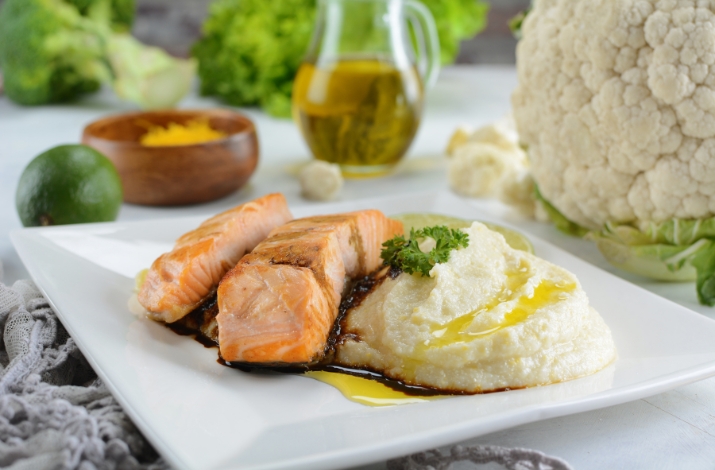
Recipe makes 4 servings
Ingredients:
For the salmon:
4 salmon filets, 6 oz (170g) each
2 Tbsp olive oil
2 garlic cloves, minced
1 tsp Italian seasoning
Salt and black pepper to taste
For the cauliflower mash:
1 medium cauliflower head, chopped into florets
1 Tbsp plain Greek yogurt
1 Tbsp butter
2 Tbsp grated Cheddar
½ tsp garlic powder
Salt and black pepper to taste
Instructions:
Preheat the oven to 400°F (200°C). Line a baking dish with parchment paper and set it aside.
Peel and mince the garlic. Brush the filets with two tablespoons of olive oil and rub with garlic and Italian seasoning. Season with salt and black pepper to taste and bake for 12-15 minutes.
Meanwhile, cut the cauliflower into smaller florets. Place them in a deep pot and pour in enough water to cover. Boil for about 15 minutes or until completely tender.
Remove from the heat and drain. Cool for a while, then transfer to a food processor along with Greek yogurt, butter, cheddar, and garlic powder. Season with some salt and black pepper to taste and pulse until smooth.
Serve the filets with the prepared cauliflower mash. Optionally, drizzle everything with some more olive oil or your favorite low-carb barbecue sauce. Enjoy!
Nutritional breakdown per serving (recipe makes 4 servings)
485 Calories
41.5g Protein
31.5g Fat
3.7g Fiber
8.7g Total Carbs
5g NET Carbs


Most Popular