Keto Taco Cups
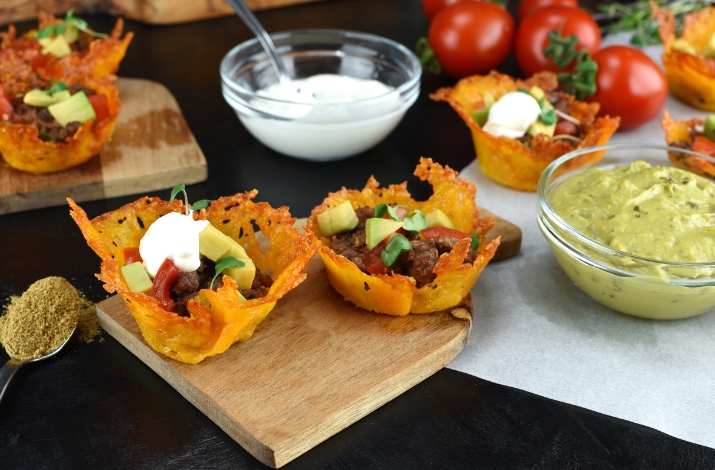
Recipe makes 6 servings
Ingredients:
For the taco cups:
2 cups shredded cheddar cheese
For the filling:
1 lb (455g) ground beef
1 Tbsp olive oil
1 tsp smoked paprika
1 tsp cumin
½ tsp garlic powder
½ tsp onion powder
½ tsp salt
¼ tsp black pepper
Toppings:
1 avocado, diced
6 cherry tomatoes, quartered
2 Tbsp fresh parsley, chopped
For serving:
½ cup guacamole
½ cup Greek yogurt
Instructions:
Preheat oven to 375°F (190°C). Line a baking sheet with parchment paper.
Place small piles (about ¼ cup each) of shredded cheddar onto a baking sheet, spacing them apart. Bake for 5-7 minutes until the cheese melts and turns golden around the edges.
Remove from the oven and let them cool for 30 seconds, then carefully lift each cheese circle and press it into a muffin tin to form a cup shape. Let them cool completely to set.
Heat olive oil in a pan over medium-high heat. Add ground beef and cook until browned, breaking it apart with a spatula.
Stir in paprika, cumin, garlic powder, onion powder, salt, and pepper. Cook for another 2-3 minutes, then remove from heat.
Fill each cooled cheddar cup with a spoonful of ground beef. Top with diced avocado, cherry tomatoes, and fresh parsley.
Serve with guacamole and Greek yogurt on the side.
Nutritional breakdown per serving (recipe makes 6 servings)
408 Calories
31.8g Protein
28.3g Fat
2.6g Fiber
6.7g Total Carbs
4.1g NET Carbs

Most Popular