Peruvian Beef Stew
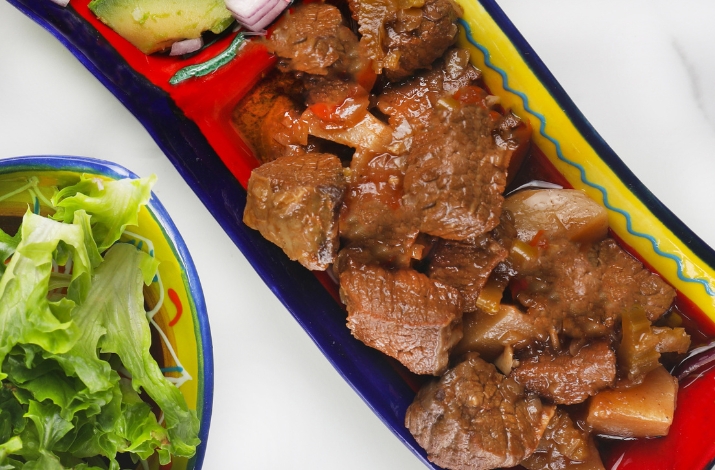
The recipe makes 4 servings
Ingredients:
3 Tbsp (40g) extra virgin olive oil, divided
1½ lb (700g) beef, cut into 11/2-inch chunks
2 (90g) chili peppers, seeded and chopped
1 (150g) large red onion, chopped
2 (6g) large garlic cloves, minced
1 tsp (2g) ground coriander
1 tsp (2g) ground cumin
2 large tomatoes, peeled and diced
1 cup (240ml) beef broth or as needed
2 (244g) medium turnips, peeled, and cut into 1-inch chunks
1 bay leaf
salt and freshly ground black pepper
4 Tbsp (4g) chopped fresh parsley or cilantro
1 (44g) lime, zested and juiced
Instructions:
Heat 2 tablespoons olive oil in a casserole pan over medium-high heat; add beef and sear, stirring occasionally, until browned, about 5 minutes. Transfer to a plate and set aside.
Reduce the heat to medium and the remaining 1 tablespoon olive oil to the pan; add the onion and sauté for about 3 minutes, or until softened. Add chili pepper and garlic, and cook until fragrant, 1-2 minutes. Stir in coriander and cumin, then add tomatoes and bay leaf.
Return beef to the pot, pour in enough broth to cover, and bring to a boil. Reduce the heat to medium low and cover with a lid. Simmer for about 1 hour, or until the beef is fork-tender, adding a splash of broth as needed.
Add the turnips and simmer for about 20 to 25 minutes, until the turnips are cooked, and the beef is very tender. Stir in the cilantro and lime zest and juice, before turning off the heat.
Nutritional breakdown per serving (the recipe makes 4 servings)
388 Calories
40.5g Protein
18.5g Fat
3.2g Fiber
14.9g Total Carbs
11.5g NET Carbs


Most Popular