Rosemary Chicken with Broccoli and Cabbage
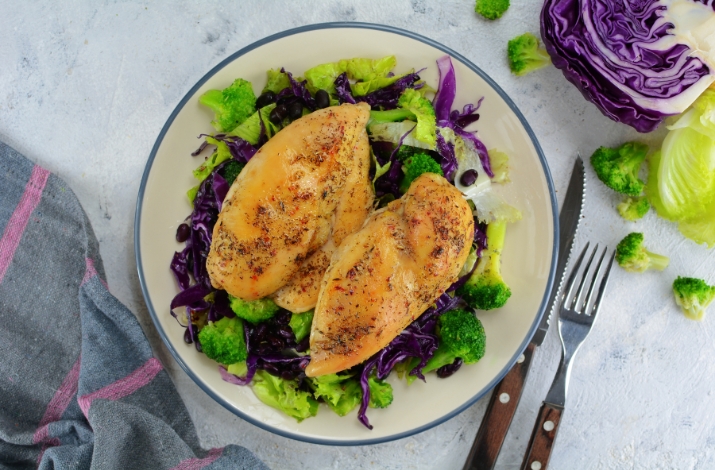
Recipe makes 2 servings
Ingredients:
For the Chicken:
2 boneless, skinless chicken breasts
2 Tablespoons olive oil
1 teaspoon dried rosemary
1 teaspoon paprika
Salt and black pepper, to taste
For the Salad:
1 cup broccoli florets, steamed
1 cup cabbage, shredded
1 cup lettuce, chopped
1 Tablespoon olive oil (for dressing)
1 Tablespoon lemon juice or apple cider vinegar
Salt and black pepper, to taste
Instructions:
Preheat the oven: Preheat your oven to 375°F (190°C).
Place the chicken breasts on a baking sheet. Brush them with olive oil on both sides. Sprinkle the chicken with dried rosemary, paprika, salt, and black pepper, ensuring they are evenly coated.
Bake the chicken in the preheated oven for 25-30 minutes, or until the chicken is fully cooked through.
While the chicken is baking, steam the broccoli florets until slightly tender but still crisp, about 5 minutes.
In a large bowl, combine the steamed broccoli, shredded cabbage, and chopped lettuce, Drizzle the olive oil and lemon juice (or vinegar) over the vegetables, and season with salt and black pepper. Toss everything together.
Divide the salad onto two plates, and top each plate with the prepared chicken breasts.
Serve immediately with an extra drizzle of olive oil or lemon juice, if desired.
Nutritional breakdown per serving (recipe makes 2 servings)
468 Calories
45g Protein
27g Fat
5g Fiber
12g Total Carbs
7g NET Carbs


Most Popular