Baked Salmon Fillet with Sauteed Garlic Spinach
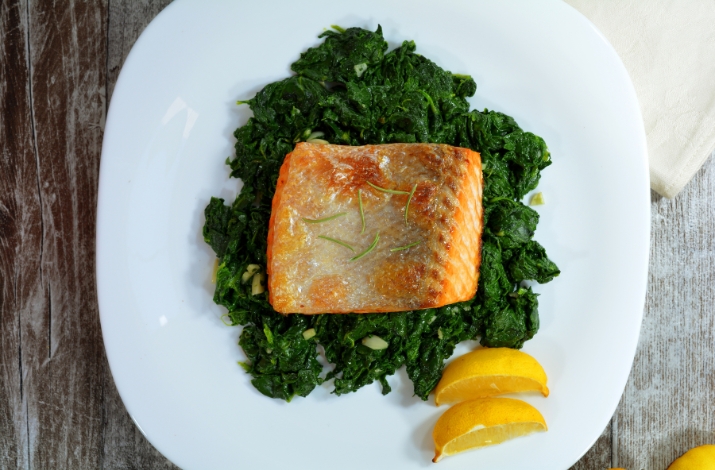
Recipe makes 2 servings
Ingredients:
For the salmon:
2 skin-on salmon fillets (approx. 7oz/200 g each)
1 Tbsp olive oil
1 tsp fresh rosemary leaves (or ½ tsp dried)
Salt and freshly ground black pepper, to taste
Lemon wedges, for serving
For the spinach:
10.5oz/ 300g fresh spinach
2 Tbsp olive oil
2 garlic cloves, thinly sliced
Salt, to taste
Instructions:
Prepare the oven:
Preheat the oven to 400°F (200°C). Line a baking tray with parchment paper.
Pat the salmon fillets dry with paper towel. Place them skin-side down on the tray.
Rub the top of the fillets with olive oil, and then sprinkle with salt, black pepper, and rosemary leaves.
Bake for 15-18 minutes, or until the salmon is cooked through and flakes easily with a fork. For a crispier top, broil for the last 2 minutes.
While the salmon bakes, heat olive oil in a large skillet over medium heat. Add the sliced garlic and cook for 30-60 seconds until fragrant, but not browned.
Add the fresh spinach in batches, stirring constantly until wilted. Season lightly with salt. This process should take 4-5 minutes in total.
Drain any excess liquid if needed.
Place a generous bed of sautéed spinach in the center of each plate. Top with a baked salmon fillet and garnish with fresh lemon wedges on the side.
Serve immediately while warm.
Nutritional breakdown per serving (2 servings)
585 Calories
44g Protein
43g Fat
3.5g Fiber
6.5g Total Carbs
3g NET Carbs


Most Popular