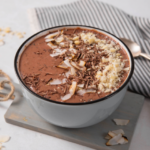
Black Forest Berry Smoothie Bowl
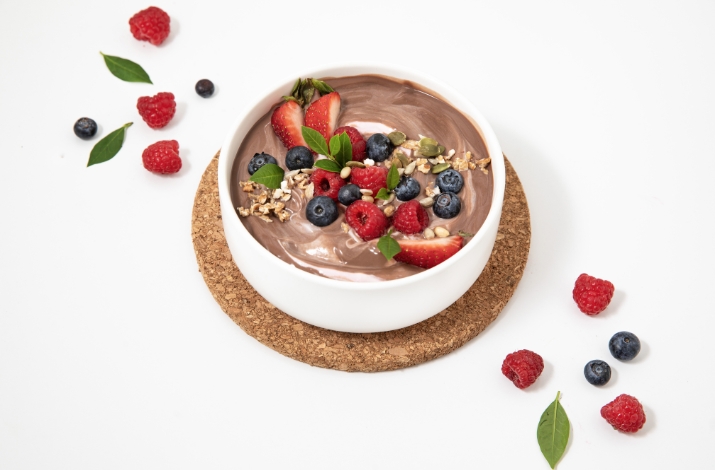
Recipe makes 2 servings
Ingredients:
Smoothie:
1/2 cup (240ml) unsweetened almond milk or another non-dairy milk of choice
1 cup (126g) frozen mixed berries (such as cherries, raspberries, and blackberries)
1/4 cup (60g) heavy cream
2 Tbsp (31g) unsalted almond butter
1 Tbsp (10g) hemp or chia seeds
2 Tbsp (1.6g) monk fruit sweetener (or other sugar-free sweetener of choice)
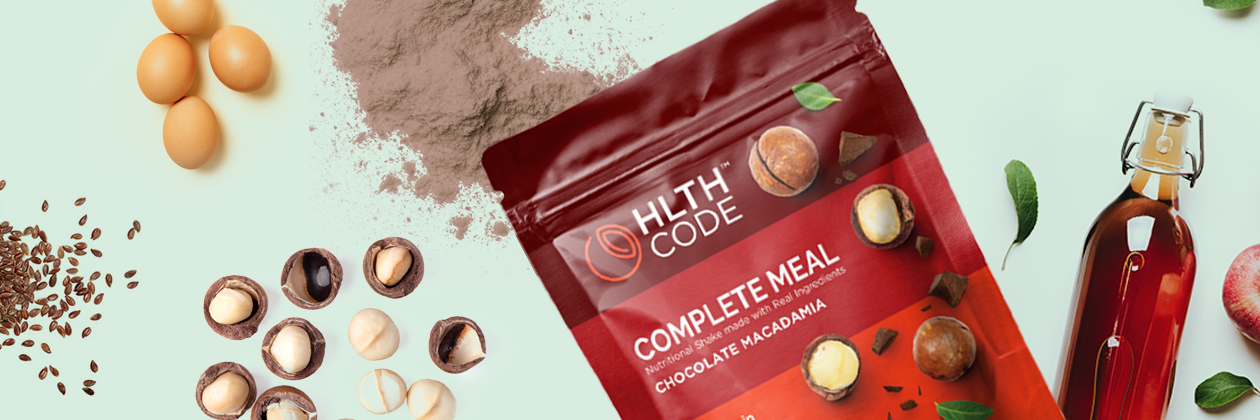
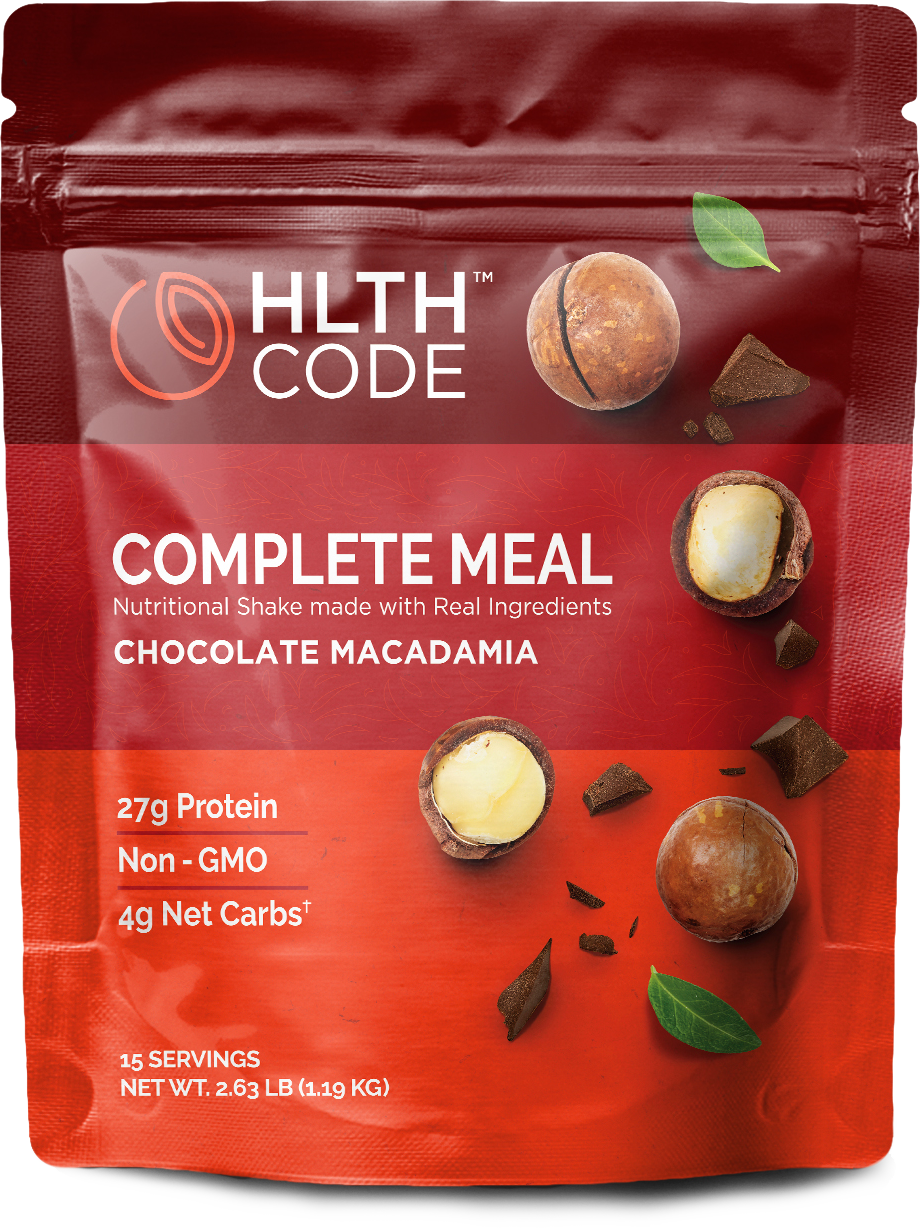
2 scoops (80g) HLTH Code Chocolate Macadamia
1 Tbsp (7.5g) unsweetened raw cocoa powder (or to taste)
1 cup (111g) ice cubes
Topping:
1/3 cup (38g) fresh berries (such as strawberries, blueberries, and raspberries)
1 Tbsp (15g) chopped almonds or walnuts
2 Tbsp (32g) chopped dark chocolate (at least 85% cocoa), optional
Instructions:
Combine almond milk, berries, heavy cream, almond butter, seeds, and sweetener in a blender and blend until smooth and well combined.
Pour about 1/3 cup of the smoothie into a glass and reserve for decoration, if desired.
Add HLTH Code Chocolate Macadamia, cacao powder, and ice to the blender and blend well. Taste the smoothie and adjust the sweetness or cocoa flavor if desired by adding more sweetener or cocoa powder, then pour it into two serving bowls.
Spoon the reserved smoothie into the bowls and swirl with a spoon; garnish with fresh berries, chopped nuts, and chopped dark chocolate or a sprinkle of cacao powder.
Serve immediately and enjoy!
Optional: You can customize this recipe by adding a dollop of unsweetened whipped cream or a drizzle of sugar-free chocolate syrup as an extra treat.
Nutritional breakdown per serving (recipe makes 2)
41.4g Fat
16.8g NET Carbs

Most Popular