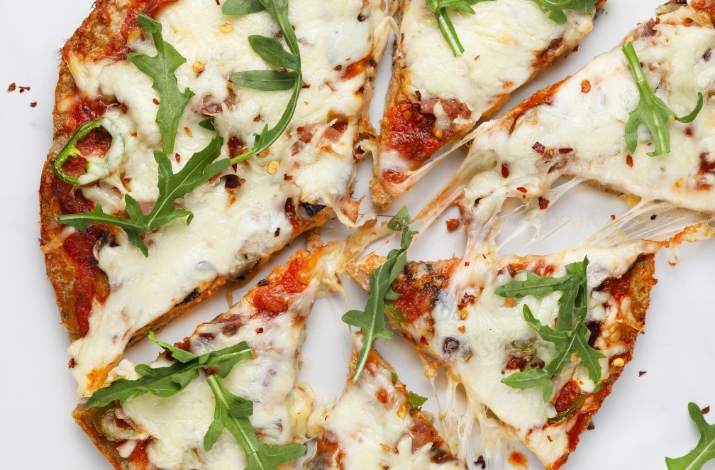
Chicken Crust Pizza
The recipe makes 4 servings
Ingredients:
Crust:
1lb (454g) ground chicken (or turkey)
1 tsp (3g) garlic powder (or onion powder)
1 Tbsp (10g) unsalted butter (or ghee), at room temperature
1 large egg (50g), lightly beaten
2/3 cup (75g) shredded mozzarella or another cheese of choice
1/3 cup (30g) grated parmesan
sea salt and black pepper, to taste
1 tsp dried Italian seasoning or dried oregano
Topping:
1/4 cup (63g) sugar-free pizza sauce or tomato sauce
1/3 cup (21g) sliced mushrooms
1/2 green bell pepper (60g), seeded and thinly sliced
2 Tbsp (30g) pitted sliced olives
1 cup (113g) shredded mozzarella
To serve (optional):
baby arugula
red pepper flakes
grated parmesan
Instructions:
Heat the oven to 400°F/200°C/Gas Mark 6; line a baking sheet with parchment paper.
Combine all crust ingredients in a bowl and mix well.
Press the mixture onto the prepared baking sheet to form a 1/4-inch-thick circle; bake for about 20 minutes or until golden brown.
Remove the sheet from the oven and spread the pizza sauce on top of the crust. Scatter over the mushrooms, bell pepper, prosciutto, if using, and olives. Return to the oven and bake for about 10 minutes or until the cheese is melted and bubbling.
Transfer the pizza to a serving board or platter and let it cool slightly before cutting into six wedges.
If desired, serve topped with baby arugula leaves, pepper flakes, and grated parmesan.
Nutritional breakdown per serving (the recipe makes 4 servings)
409 Calories
34.5g Protein
27.8g Fat
1.0g Fiber
5.5g Total Carbs
4.5g NET Carbs


Most Popular