Chicken with Chorizo
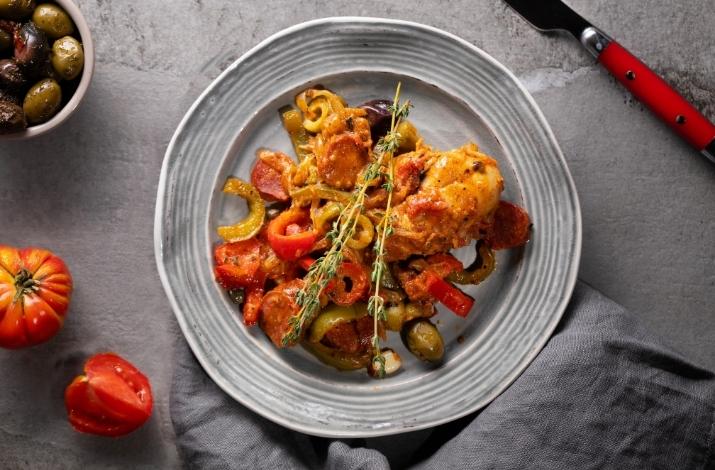
Recipe makes 4 servings
Ingredients:
1 ½ lb (675g) boneless skinless chicken thighs
salt and freshly ground black pepper
1/2 tsp Spanish smoked paprika
2 Tbsp (28ml) extra virgin olive oil
2 medium (110g each) yellow onions, sliced
4 oz (110g) Spanish chorizo or another low-carb sausage of choice, thinly sliced
2 medium (120g each) bell peppers, seeded and cut into 1/4-inch thick strips
3 large garlic cloves, finely chopped
1 cup (180g) diced tomatoes
1 cup (240ml) chicken stock (more as needed)
2 fresh thyme sprigs
1/4 cup (54g) pitted Spanish olives, sliced
Instructions:
Pat the chicken dry with paper towels; season with salt and pepper and rub with the smoked paprika.
Heat the olive oil in a casserole pan over medium heat; add the chicken thighs, and cook, turning often, until evenly browned. Transfer to a plate and set aside.
Add the onions and chorizo to the pan and sauté, stirring frequently, until the onions are translucent, 5 to 6 minutes. Add the peppers, garlic, and tomatoes, and cook until most of the liquid has evaporated, 5 to 8 minutes. Return the chicken thighs to the pot, add thyme sprigs, and pour in enough chicken stock to cover it.
Reduce heat to medium-low, cover with the lid, and cook for about one hour or until the chicken is tender. Stir in the olives and continue cooking for about 10 minutes longer. Serve warm.
Nutritional breakdown per serving (the recipe makes 4 servings)
457 Calories
36.01g Protein
30.8g Fat
3.1g Fiber
12.2g Total Carbs
8.9g NET Carbs


Most Popular