Feta Fritatta
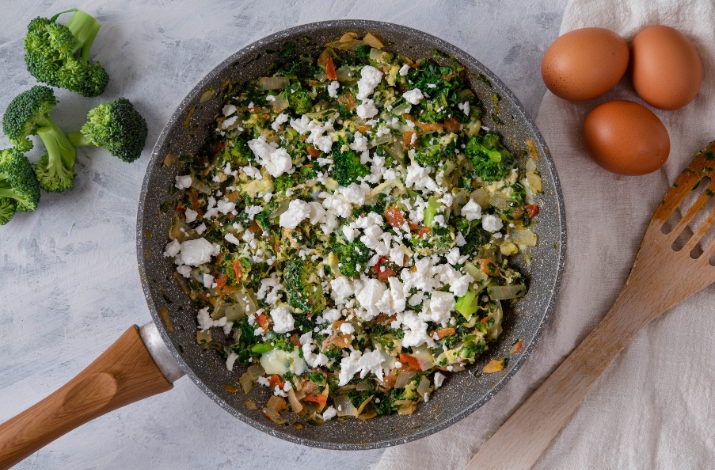
Recipe makes 2 servings
Ingredients:
6 large eggs
1 cup broccoli florets, chopped
1 small onion, finely chopped
1 medium red bell pepper, diced
1 medium tomato, diced
100g (about 3.5 oz) feta cheese, crumbled
2 Tbsp olive oil
1 tsp dried oregano
½ tsp garlic powder
Salt and pepper to taste
Fresh parsley or basil for garnish (optional)
Instructions:
In a large non-stick skillet, heat the olive oil over medium heat. Add the chopped onion and red bell pepper, and sauté for about 3-4 minutes until they begin to soften. Then, add the broccoli and cook for an additional 2-3 minutes until slightly tender.
In a bowl, whisk together the eggs, garlic powder, oregano, salt, and pepper until well combined. Stir in the diced tomato and crumbled feta cheese.
Pour the egg mixture over the sautéed vegetables in the skillet, ensuring even distribution. Cook on the stovetop for about 2-3 minutes without stirring, until the edges begin to set.
Reduce the heat to low and cover the skillet with a lid. Cook for an additional 8-10 minutes, or until the frittata is fully set in the center.
Once done, remove the lid and let it cool for a few minutes. Serve warm or at room temperature.
Nutritional breakdown per serving (recipe makes 2 servings)
556 Calories
29.5g Protein
41g Fat
5.5g Fiber
19.5g Total Carbs
14g NET Carbs

Most Popular