Double Bacon Cheeseburger Casserole
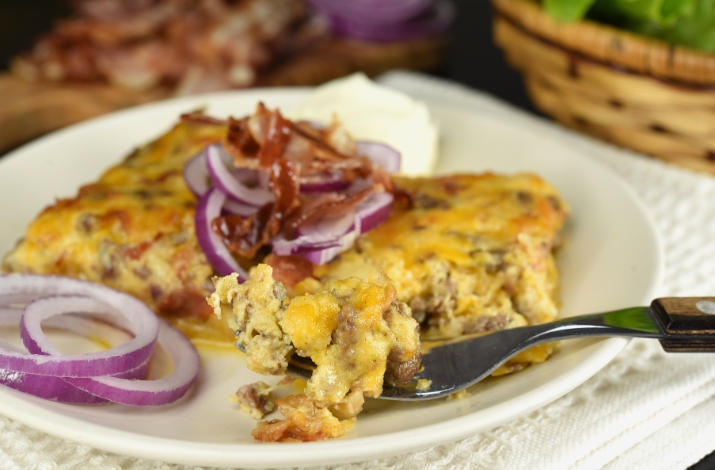
Recipe makes 6 servings
Ingredients:
Meat Base
24.6 oz/700 g ground beef
1 small onion, finely chopped
2 cloves garlic, minced
Salt & black pepper
1 Tbsp Worcestershire sauce (optional)
½ tsp smoked paprika
½ tsp mustard powder
Cheeseburger Layer
6 slices cooked bacon, chopped
1½ cups shredded cheddar cheese
Optional: 2 cherry tomatoes, halved
Topping
4 large eggs
½ cup heavy cream
2 Tbsp cream cheese, softened
1 tsp yellow mustard or Dijon
¼ cup shredded cheddar
Pinch of salt & pepper
To Serve
½ medium red onion, thinly sliced
2 slices crispy bacon
2 Tbsp sour cream
2 medium pickles
Instructions:
Heat a large skillet over medium-high heat. Add ground beef and cook until browned, breaking into crumbles.
Add chopped onion and garlic; cook 3-4 minutes until soft. Season with salt, pepper, smoked paprika, Worcestershire sauce and mustard powder.
Simmer 1-2 minutes to combine flavors.
Drain excess fat only if there’s a lot of it. If not, reserve it for flavor.
Preheat oven to 375°F/190°C.
Spread the beef mixture evenly into a baking dish. Sprinkle chopped bacon over the top. Add a generous layer of shredded cheddar cheese.
Optionally, add the cherry tomatoes.
In a bowl, whisk together eggs, heavy cream, softened cream cheese, mustard, ¼ cup cheddar, salt and pepper.
Pour the mixture evenly over the beef layer. This forms the “cheeseburger casserole texture”.
Bake uncovered 25-30 minutes, or until the top is golden and set, and the center is firm but not dry.
Let rest 5 minutes before cutting.
Serve with red onion slices, crispy bacon, sour cream, and pickles.
Nutritional breakdown per serving. Recipe makes 6 servings
603 Calories
48.5g Protein
41.3g Fat
1.1g Fiber
7.4g Total Carbs
6.3g NET Carbs

Most Popular