Can Intermittent Fasting “Reset” Your Insulin Levels?
Insulin is one of the most important hormones for evaluating metabolic health. When insulin levels remain chronically elevated, it typically reflects a state of energy excess, where the body is continually processing incoming nutrients without sufficient opportunity to return to baseline. This can result in elevated circulating glucose and free fatty acids, which over time contribute to vascular dysfunction, inflammation, and increased risk for cardiometabolic diseases such as type 2 diabetes. For this reason, one of the main objectives in improving metabolic health is to reduce the overall demand for insulin while improving how effectively tissues respond to it. While exercise remains one of the most well-established interventions, intermittent fasting (IF) has emerged as a complementary strategy. The concept of “resetting” insulin, however, requires some clarification.
There is no discrete biological “reset” for insulin. Instead, what is often described as a reset reflects two measurable adaptations: a reduction in fasting insulin concentrations and an improvement in insulin sensitivity at the level of skeletal muscle, liver, and adipose tissue. Clinically, this translates to a lower insulin response to the same glycemic load and improved glycemic control with less hormonal output. Evidence from randomized controlled trials and meta-analyses demonstrates that intermittent fasting can improve these markers, particularly in individuals with obesity, prediabetes, metabolic syndrome, or type 2 diabetes [1–9]. Reductions in fasting insulin, fasting glucose, and HOMA-IR suggest meaningful improvements in insulin resistance and metabolic efficiency [4,9].
The primary mechanism by which fasting influences insulin is through temporal restriction of energy intake. In our modern world, food is relatively cheap and easy to come by. This has produced eating patterns characterized by frequent meals and snacks, which means insulin often remains elevated for much of the day. Intermittent fasting introduces prolonged periods without caloric intake, allowing insulin to decline toward a physiological baseline. Repeated exposure to these lower insulin states may enhance receptor sensitivity and intracellular signaling pathways, improving glucose uptake and substrate utilization over time. From a clinical perspective, this is particularly relevant for individuals with hyperinsulinemia, where reducing total daily insulin exposure is a key therapeutic target.

Timing of food intake is another critical variable. Early time-restricted feeding, which concentrates caloric intake earlier in the day (for example, between 8:00 am and 4:00 pm), has consistently demonstrated superior improvements in insulin sensitivity compared to later eating windows [1,3,5,6,12]. This likely reflects circadian alignment, as insulin sensitivity and glucose tolerance are highest earlier in the day and decline in the evening hours. This also allows the calories you have eaten to be used during the waking hours of the day when you are more physically active. Practically, this suggests that an individual who front-loads calories and minimizes late-night eating may achieve better glycemic control, even without changing total caloric intake.
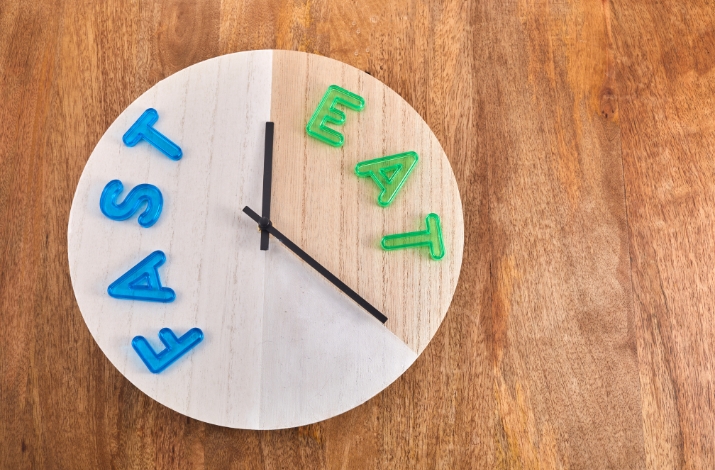
Several structured fasting protocols are commonly used, each with distinct physiological and practical implications. Time-restricted feeding, often implemented as a 12–16 hour fasting window with an 8–12 hour eating window, is the most accessible and sustainable approach for most individuals. A simple example is a 16:8 protocol, where food intake occurs within an 8-hour window (e.g., 12:00 pm to 8:00 pm) and fasting occurs for the remaining 16 hours. Alternate-day fasting (ADF) involves alternating between days of normal intake and days of significant caloric restriction (typically 0–25% of energy needs). The 5:2 model is a modified version of this approach, where individuals consume their usual diet five days per week and restrict caloric intake to approximately 500–600 calories on two non-consecutive days. Regardless of the approach you take, the key aspects of these routines are that they create intermittent periods of low insulin exposure and negative energy balance, which can improve insulin sensitivity, particularly in individuals with excess body fat or metabolic dysfunction [4,9,11].
Despite these benefits, intermittent fasting is not universally effective and should not be viewed as a one-size-fits-all intervention. Short-term studies have demonstrated that some individuals, particularly women, may experience transient reductions in insulin sensitivity or elevations in fasting glucose during the early phases of fasting adaptation [10,13]. These responses are likely related to counterregulatory hormonal changes, including increases in cortisol and hepatic glucose output. Additionally, individual variability in response to fasting is influenced by factors such as baseline metabolic health, diet composition, sleep patterns, and circadian alignment [9,11,14,15]. For patients with diabetes, particularly those on glucose-lowering medications, fasting should be implemented with medical oversight to mitigate the risk of hypoglycemia.
From a practical standpoint, fasting does not need to be extreme to be clinically meaningful. A 12-hour overnight fast represents a foundational starting point. For example, ceasing caloric intake at 8:00 pm and delaying the first meal until 8:00 am allows insulin levels to decline for a sustained period. Physiologically, insulin approaches a lower baseline during this window, and extending the fast beyond 12 hours can further prolong this effect. This approach is often sufficient to produce measurable improvements in insulin dynamics without significant disruption to daily routines.
Equally important is the composition of meals used to initiate and terminate the fasting period. Consuming a meal that is moderate in protein and fat, with a lower glycemic load, can attenuate postprandial glucose and insulin excursions. From a mechanistic standpoint, breaking a fast with a high-glycemic, highly processed meal may result in exaggerated insulin and glucose spikes, potentially counteracting some of the metabolic benefits of fasting. You can keep your insulin and glucose lower after breaking a fast if you do it right.
Ultimately, intermittent fasting should be integrated within a broader clinical framework that includes physical activity, dietary quality, and sleep. Exercise, in particular, enhances insulin-independent glucose uptake, complementing the insulin-lowering effects of fasting. When combined, these strategies produce additive improvements in insulin sensitivity and metabolic health.
In summary, intermittent fasting does not function as a discrete “reset” mechanism but rather as a repeated metabolic intervention that progressively improves insulin regulation. Its effectiveness is dependent on consistency, timing, and individual physiology. When applied appropriately, particularly in individuals with insulin resistance, it can serve as a valuable adjunct to improve glycemic control and reduce cardiometabolic risk. If you haven’t fasted regularly before, start slow and work your way up. Do a 12-hour overnight fast for a few weeks. Then slowly expand your fasting window over time. You will be amazed at what your body can adapt to and how simple changes over time make a lasting impact on your health.
Happy fasting!
References
-
- Sutton EF, Beyl R, Early K, Cefalu WT, Ravussin E, Peterson CM. Early time-restricted feeding improves insulin sensitivity, blood pressure, and oxidative stress even without weight loss in men with prediabetes. Cell Metab. 2018;27(6):1212-1221.e3. doi:10.1016/j.cmet.2018.04.010
- Centner S. Effects of intermittent fasting on blood insulin levels and insulin sensitivity: a literature review. Published 2019.
- Xie Z, Sun Y, Ye Y, et al. Randomized controlled trial for time-restricted eating in healthy volunteers without obesity. Nat Commun. 2022;13:254. doi:10.1038/s41467-022-28662-5
- Yuan X, Wang J, Yang S, et al. Effect of intermittent fasting diet on glucose and lipid metabolism and insulin resistance in patients with impaired glucose and lipid metabolism: a systematic review and meta-analysis. Int J Endocrinol. 2022;2022:6999907. doi:10.1155/2022/6999907
- Petridi F, Geurts J, Nyakayiru J, et al. Effects of early and late time-restricted feeding on parameters of metabolic health: an explorative literature assessment. Nutrients. 2024;16(11):1721. doi:10.3390/nu16111721
- Jones R, Pabla P, Mallinson J, et al. Two weeks of early time-restricted feeding improves skeletal muscle insulin and anabolic sensitivity in healthy men. Am J Clin Nutr. 2020;112(4):1015-1028. doi:10.1093/ajcn/nqaa192
- Xie Z, He Z, Ye Y, Mao Y. Effects of time-restricted feeding with different feeding windows on metabolic health: a systematic review of human studies. Nutrition. 2022;102:111764. doi:10.1016/j.nut.2022.111764
- Che T, Yan C, Tian D, Zhang X, Liu X, Wu Z. Time-restricted feeding improves blood glucose and insulin sensitivity in overweight patients with type 2 diabetes: a randomized controlled trial. Nutr Metab (Lond). 2021;18:88. doi:10.1186/s12986-021-00613-9
- Silva AI, Direito M, Pinto-Ribeiro F, Ludovico P, Sampaio-Marques B. Effects of intermittent fasting on regulation of metabolic homeostasis: a systematic review and meta-analysis in health and metabolic-related disorders. J Clin Med. 2023;12(11):3699. doi:10.3390/jcm12113699
- Hutchison AT, Liu B, Wood RE, et al. Effects of intermittent versus continuous energy intakes on insulin sensitivity and metabolic risk in women with overweight. Obesity (Silver Spring). 2019;27(1):50-58. doi:10.1002/oby.22345
- Nowosad K, Sujka M. Effect of various types of intermittent fasting on weight loss and improvement of diabetic parameters in humans. Curr Nutr Rep. 2021;10(2):146-154. doi:10.1007/s13668-021-00353-5
- Sepúlveda B, Marín A, Burrows R, Sepúlveda Á, Chamorro R. It’s about timing: contrasting the metabolic effects of early vs late time-restricted eating in humans. Curr Nutr Rep. 2024;13(2):214-239. doi:10.1007/s13668-024-00532-0
- Rachmayanti DA, Rejeki PS, Argarini R, et al. Effects of short-term (20-day) alternate-day modified fasting and time-restricted feeding on fasting glucose and IGF-1 in obese young women. Diseases. 2025;13(12):390. doi:10.3390/diseases13120390
- Wen X, Xu Y, Li L. The effects of different intermittent fasting regimens in people with type 2 diabetes: a network meta-analysis. Front Nutr. 2024;11:1325894. doi:10.3389/fnut.2024.1325894
- Zambuzzi WF, Ferreira MR, Wang Z, Peppelenbosch MP. A biochemical view on intermittent fasting’s effects on human physiology—not always a beneficial strategy. Biology (Basel). 2025;14(6):669. doi:10.3390/biology14060669
This article is for informational and educational purposes only. It is not, nor is it intended to be substitute for professional medical advice, diagnosis, or treatment and should never be relied upon for specific medical advice.


Most Popular