Grilled Rib Eye Steak Salad
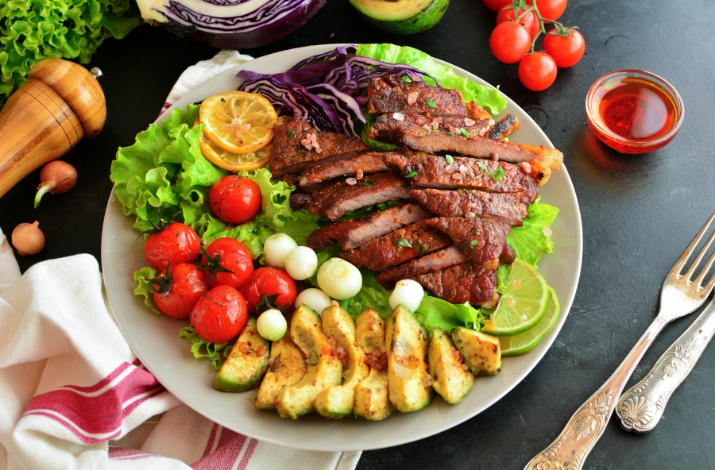
Recipe makes 2 servings
Ingredients:
2 rib eye steaks (approx. 7oz/150 g each)
1 small avocado, halved and pitted
10 whole cherry tomatoes
10 small pearl onions, peeled
4 cups lettuce leaves, torn
1 cup shredded cabbage
Juice of ½ lemon
Juice of ½ lime
2 Tbsp olive oil
1 Tbsp soy sauce or tamari (low-sodium)
1 tsp Dijon mustard
1 tsp minced garlic
½ tsp smoked paprika
½ tsp black pepper
Salt, to taste
Instructions:
In a small bowl, whisk together olive oil, soy sauce, Dijon mustard, minced garlic, smoked paprika, salt, and black pepper.
Place rib eye steaks in a shallow dish and pour half of the marinade over them. Toss avocado halves, cherry tomatoes, and pearl onions with the remaining marinade. Let everything sit for 10-15 minutes.
Preheat grill or grill pan to medium-high heat. Grill steaks for 4-6 minutes per side, or until desired doneness. Let rest for 5 minutes, then slice the steaks.
Grill avocado cut-side down for 2-3 minutes until lightly charred. When done, slice the avocado. Grill cherry tomatoes and pearl onions until tender and caramelized, about 5-7 minutes.
Arrange lettuce leaves and shredded cabbage on serving plates. Add sliced rib eye, sliced grilled avocado, cherry tomatoes, and pearl onions over the greens. Drizzle with lemon and lime juice, season with extra salt and pepper if needed. Optionally, garnish everything with freshly chopped parsley. Enjoy!
Nutritional breakdown per serving (2 servings)
635 Calories
45.5g Protein
42g Fat
8g Fiber
21g Total Carbs
13g NET Carbs

Most Popular