Keto Cauliflower Mughlai Stew
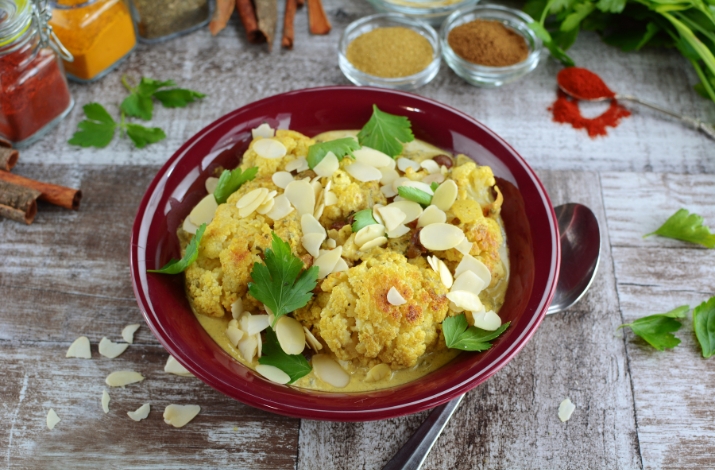
Recipe makes 6 servings
Ingredients:
Cauliflower:
2 cups cauliflower, cut into small florets
2 Tbsp olive oil
Salt and ground black pepper to taste
Curry:
2 Tbsp olive oil
1 small onion, finely chopped
1 cinnamon stick, broken in half
4 cloves
1 tsp ginger, grated
2 garlic cloves, minced
1 tsp dry cilantro
2 tsp ground cumin
2 tsp garam masala
1 tsp red pepper flakes
¾ cup almonds, finely chopped
½ cup water
½ cup Greek yogurt
½ cup heavy cream
1 tsp salt
1 Tbsp raisins
2 cups chicken broth
Cilantro, optional topping
Flaked almonds, optional topping
Instructions:
Preheat the oven to 425°F (220°C). Arrange chopped cauliflower over a large baking sheet and drizzle with olive oil. Season with salt and pepper and roast for 7-10 minutes. Remove from the oven and set aside.
Grease a large frying pan with olive oil and heat up over medium-high heat. Add chopped onions, cinnamon stick, cloves, ginger, garlic, ground cilantro, cumin powder, garam masala, red pepper flakes, and almonds. Cook for 8-10 minutes, stirring occasionally.
Pour in the water and continue to cook for 5 minutes over medium heat.
Next, add Greek yogurt, heavy cream, salt, raisins, and chicken broth. Continue to cook for 10-15 minutes over medium heat.
Stir in the roasted cauliflower. Cook for a couple of minutes more and remove from the heat.
Optionally, garnish with freshly chopped cilantro and almond flakes.
Nutritional breakdown per serving (recipe makes 6 servings)
299 Calories
9g Protein
26g Fat
3.3g Fiber
10.1g Total Carbs
6.8g NET Carbs

Most Popular