Low-Carb Sushi
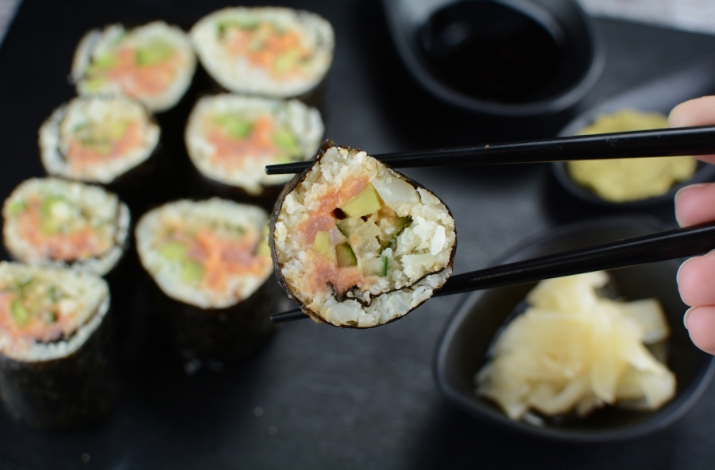
Recipe makes 4 servings
Ingredients:
9 oz (255g) cauliflower (approximately 1 small head)
1 Tbsp olive oil
3.8 oz (110g) tuna steak, sashimi grade
2 Tbsp mayonnaise
2 tsp sriracha
¼ tsp sea salt
2 nori sheets
1 small cucumber, cut into strips
½ medium avocado, cut into strips
Pickled ginger and wasabi to serve, optional
Instructions:
First, prepare the cauliflower rice (or use a pre-prepared product). Preheat the oven to 220°C (428°F). Line a baking tray with parchment paper and set it aside.
Cut the cauliflower into small florets. Add the cauliflower and olive oil to a food processor and pulse until the cauliflower resembles rice. Transfer to the prepared baking tray and bake for 30 minutes, stirring every 10 minutes for an even cooking.
When done, remove it from the oven and cool to room temperature.
Meanwhile, prepare the tuna mixture. Cut the tuna steak into smaller pieces and add to a food processor. Pulse until nicely minced.
Transfer the tuna to a bowl and add mayonnaise, sriracha, and salt. Mix until thoroughly combined.
Place one nori sheet onto a sushi mat and cover it with toasted cauliflower, leaving about 2cm of space at the end farthest from you.
Spread toppings over the end closest to you and carefully roll. Cut into 4 equal pieces. Repeat the process with the remaining ingredients.
Optionally, serve with pickled ginger and wasabi.
Nutritional breakdown per serving (recipe makes 4 servings)
167 Calories
8.2g Protein
12.7g Fat
3.5g Fiber
6.5g Total Carbs
3g NET Carbs

Most Popular