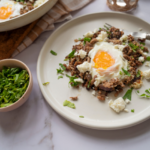
Mediterranean Green Bean Casserole

Recipe makes 4 servings
Ingredients:
2 Tbsp olive oil
1 lb (454g) fresh or frozen cut green beans
1 medium onion (110g), chopped
1 medium red bell pepper (119g), seeded and chopped
2 cloves garlic (6g), minced
2 cups (312g) button mushrooms, sliced
1/2 cup (121g) diced tomatoes
1 tsp dried oregano
1 tsp paprika
Salt and black pepper
1/2 cup (120ml) vegetable or chicken stock (as needed)
Topping
2 eggs (44g each)
1/2 cup (122g) plain yogurt
2 Tbsp (30g) tahini
1/4 cup (28g) grated cheddar cheese
1/4 cup (15g) chopped fresh parsley
2 Tbsp (17g) toasted pine nuts
Instructions:
Preheat the oven to 375°F (190°C).
Heat the olive oil in a large skillet over medium heat; add the chopped onion and sauté for 3 to 4 minutes, until softened.
Add red bell pepper, garlic, and mushrooms to the skillet and cook for 5 minutes. Add the trimmed green beans to the skillet and sauté for another 5 minutes.
Stir in the diced tomatoes and stock, season with dried oregano, paprika, salt, and black pepper. Transfer mixture to a baking dish and add the stock.
Bake in the preheated oven for about 15 minutes.
Whisk eggs, yogurt, and tahini in a small bowl, season with salt and pepper, and pour the mixture over the green beans. Sprinkle the cheddar cheese on top and return to the oven for 5 to 10 minutes, until bubbly and golden.
Sprinkle the casserole with fresh parsley and pine nuts before serving.
Nutritional breakdown per serving (recipe makes 4 servings)
301 Calories
12.5g Protein
19.8g Fat
7.6g Fiber
22.9g Total Carbs
14.4g NET Carbs


Most Popular