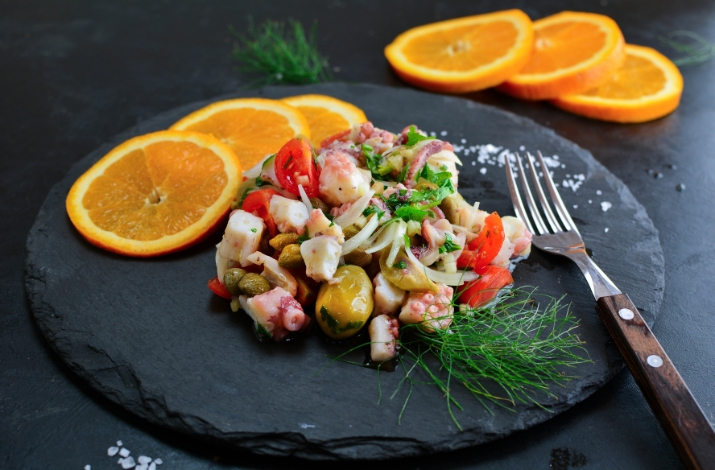
Mediterranean Seafood Salad
Recipe makes 4 servings
Ingredients:
1 pound (450g octopus) (cleaned)
10 ounces (285g) mussels (cleaned and debearded)
1 small red onion, thinly sliced
1 cup cherry tomatoes, halved
2 Tbsp capers (rinsed if salty)
¼ cup olives, sliced
2-3 Tbsp fresh parsley, finely chopped
Juice of 1 large lemon (or to taste)
4 Tbsp extra virgin olive oil
Salt to taste
Freshly cracked black pepper (optional)
1 orange, thinly sliced (for garnish)
Instructions:
Bring a large pot of water to a boil (you can add a bay leaf or wine if you like, for flavor).
Gently submerge the octopus and simmer over low heat for about 40 minutes or until fork-tender. Let it cool, then cut into bite-sized pieces.
In a separate pot, steam the mussels in a small amount of water or white wine until they open (about 5-7 minutes). Discard any that don’t open. Remove from shells and let cool.
In a large mixing bowl, combine sliced onion, cherry tomatoes, capers, olives, and chopped parsley.
Add cooled octopus and mussels to the bowl. Drizzle with olive oil and lemon juice. Season with salt (and black pepper if using). Toss everything gently to combine and coat well.
For best flavor, let the salad sit covered in the fridge for 20–30 minutes.
Plate the salad and garnish with fresh orange slices around the edges or tucked in between for a burst of citrusy brightness and color.
Nutritional breakdown per serving (recipe makes 4 servings)
461 Calories
51.5g Protein
20.7g Fat
1.25g Fiber
15g Total Carbs
13.75g NET Carbs


Most Popular