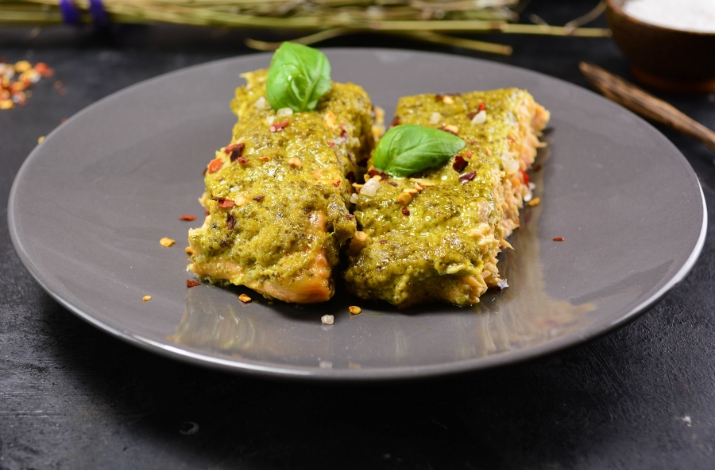
Pesto Baked Salmon
Recipe makes 4 servings
Ingredients:
4 salmon filets (about 6 ounces/170 grams each)
1 cup fresh basil leaves
¼ cup pine nuts
2 cloves garlic, minced
¼ cup grated Parmesan cheese
1/3 cup extra virgin olive oil
Juice of ½ lemon
1 tbsp lemon zest
Sea salt to taste
¼ tsp red pepper flakes
Fresh basil leaves, optional for serving
Instructions:
Preheat your oven to 400°F (200°C). Line a baking sheet with parchment paper or lightly grease it. Season the salmon filets with salt and pepper on both sides, then place them on the prepared baking sheet.
In a food processor or blender, combine the basil leaves, pine nuts, minced garlic, Parmesan cheese, lemon juice, and lemon zest. Pulse until the ingredients are finely chopped.
With the processor running, slowly drizzle in the olive oil until the mixture forms a smooth paste. Spread the green pesto mixture evenly over the tops of the salmon filets, covering them completely.
Bake the salmon in the preheated oven for about 15-20 minutes, or until the salmon is cooked through and flakes easily with a fork.
Once done, remove the salmon from the oven and let it rest for a few minutes before serving.
Serve hot, garnished with fresh basil leaves and red pepper flakes. Enjoy!
Nutritional breakdown per serving (recipe makes 4 servings)
600 Calories
41.5g Protein
46.5g Fat
0.7g Fiber
2.7g Total Carbs
2g NET Carbs


Most Popular