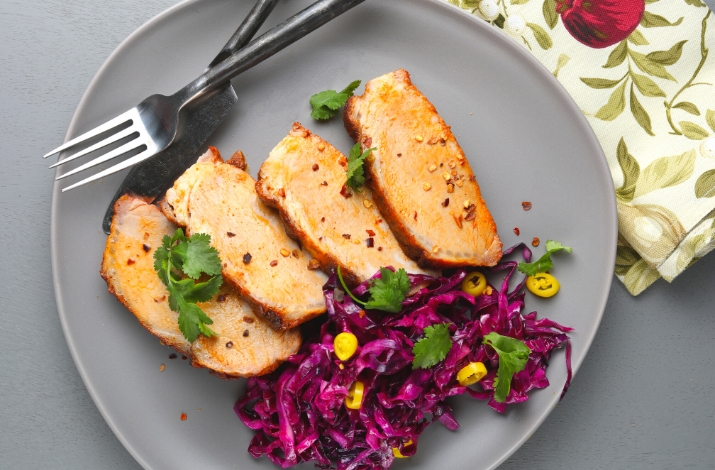
Roasted Pork Loin With Red Cabbage
Recipe makes 6 servings
Ingredients:
2 lb (900g) pork loin
1 Tbsp (14ml) olive oil
Salt and black pepper
1 tsp dried thyme
1 tsp paprika
1/2 tsp garlic powder
1/2 medium head red cabbage (420g), thinly sliced
2 Tbsp (28g) unsalted butter
1 medium onion (110g), thinly sliced
2 cloves garlic, minced
1/4 cup (60ml) apple cider vinegar
2 Tbsp (1.6g) monk fruit sweetener
1 tsp caraway seeds
Instructions:
Preheat the oven to 425°F (220°C).
Rub the pork loin with olive oil and season with salt, pepper, thyme, paprika, and garlic powder.
Place the pork loin in a roasting pan and roast for 20 minutes, then reduce the oven temperature to 350°F (180°C). Continue to roast for another 30 to 40 minutes, or until the internal temperature of the pork reaches 145°F (63°C).
Remove the pork from the oven and let it rest for 10 to15 minutes before slicing.
Melt the butter in a large pot over medium heat; add the onion and garlic and cook until softened, about 5 minutes. Stir in the red cabbage, apple cider vinegar, monk fruit sweetener, and caraway seeds; season with salt and pepper to taste. Cover the pot, reduce the heat to low, and cook the cabbage until it is tender, about 20 to 25 minutes.
Serve the sliced pork loin with the red cabbage on the side.
Nutritional breakdown per serving (the recipe makes 6 servings)
406 Calories
44.5g Protein
21.4g Fat
1.9g Fiber
11.1g Total Carbs
5.2g NET Carbs


Most Popular