Ham and Cauliflower Colcannon
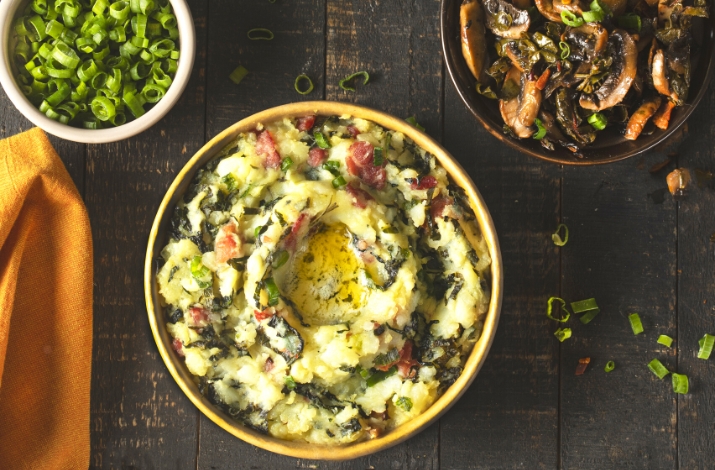
Recipe makes 4 servings
Ingredients:
1 medium cauliflower (600 g), cut into florets
4 Tbsp (51g) ghee or unsalted butter
3 garlic cloves (9g), crushed
5 cups (105g) thinly sliced kale
6 scallions (72g) plus extra for garnish, thinly sliced
1/2 cup (120ml) heavy cream
1/2 tbsp (7.5g) Dijon mustard
200g cooked deli ham, diced
salt and pepper to taste
2 Tbsp (28g) unsalted butter, softened, to serve
freshly chopped parsley for garnish
4 poached or soft-boiled eggs (156g), to serve (optional)
Instructions:
Steam cauliflower florets in a double boiler until tender. Transfer to a bowl, add two tablespoons of ghee or butter and mash with a fork or a potato masher to a slightly chunky puree. Alternatively, pulse in a food processor.
Melt the two remaining tablespoons of ghee in a large saucepan, add garlic, kale, and scallions and cook for about 5 minutes, or until wilted; stir in the cauliflower puree and heavy cream, and cook until all moisture has evaporated. Season to taste, stir in the ham, and heat through.
Serve the colcannon with a dollop of butter and egg on top and a scattering of parsley and chopped scallions.
Nutritional breakdown per serving (the recipe makes 4 servings) – without eggs
381 Calories
12.2g Protein
32.3g Fat
4.5g Fiber
14.1g Total Carbs
9.5g NET Carbs
Nutritional breakdown per serving (the recipe makes 4 servings) – with eggs
431 Calories
17.2g Protein
35.8g Fat
4.5g Fiber
14.1g Total Carbs
9.5g NET Carbs


Most Popular