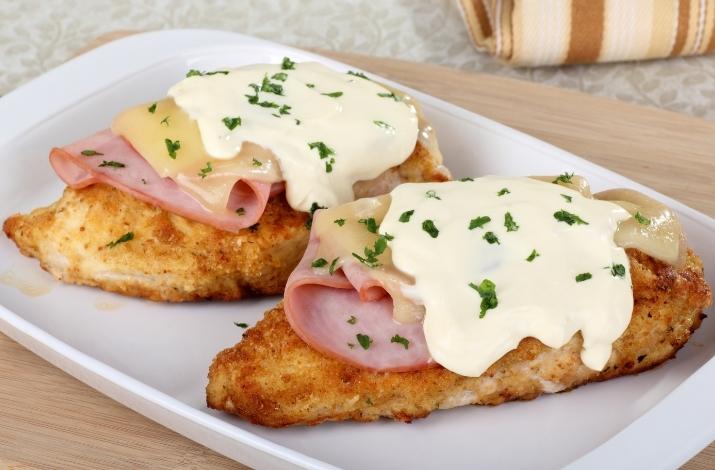
Inverted Cordon Bleu
Preparation time: 10 minutes
Cooking time: 30 minutes
Serve: 2
Ingredients:
– 2 4oz. chicken breast fillets, skinless, boneless
– 3 tablespoons mayonnaise
– 1 teaspoon Dijon mustard
– 3 tablespoons almond flour
– ¼ teaspoon garlic powder
– 4 slices pork ham
– 4 slices Gouda cheese
– Salt and pepper, to taste
Sauce:
– 2 tablespoons butter
– 1 teaspoon xanthan gum
– ½ cup heavy cream
– ¼ cup unsweetened almond milk
– 2 tablespoons Dijon mustard
– 4 tablespoons parmesan cheese
– Salt, to taste
Instructions:
1. Preheat oven to 350F.
2. Season chicken breast fillets with salt and pepper.
3. In a bowl, combine mayonnaise and Dijon. In a separate bowl, combine almond flour and garlic powder.
4. Brush the chicken with prepared mayonnaise mixture and evenly coat with almond flour.
5. Transfer the chicken breasts onto a baking sheet and spray with some oil.
6. Bake the chicken for 20 minutes.
7. Remove the chicken from oven. Preheat oven broiler.
8. Top the chicken with ham and Gouda cheese.
9. Broil the chicken for 4 minutes or until the cheese is melted.
10. In the meantime, make the sauce; melt butter over medium-high heat.
11. Stir in xanthan gum and cook, stirring constantly until light brown.
12. Whisk in heavy cream, almond milk, and Dijon. Cook for 3 minutes or until gently thickened.
13. Stir in the cheese and remove from heat.
14. Pour the sauce over inverted cordon bleu.
15. Sprinkle with parsley before serving.
Nutritional info per serving:
– Calories 707
– Total Fat 56.5g
– Total Carbohydrate 5.7g
– Dietary Fiber 1.1g
– Total Sugars 0.7g
– Protein 44.2g


Most Popular