Italian Meatballs with Spinach
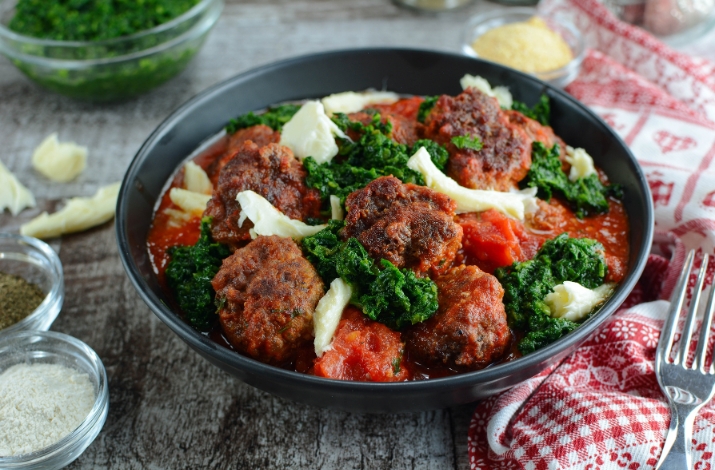
Recipe makes 5 servings
Ingredients:
Meatballs:
1 pound (450g) ground beef
½ cup grated parmesan
1 egg
1 teaspoon garlic powder
½ teaspoon dried basil
½ teaspoon onion powder
½ teaspoon salt (or to taste)
¼ teaspoon ground black pepper
2 Tablespoons olive oil
Tomato Sauce:
14 ounces (400g) canned whole tomatoes
Salt and pepper to taste
2 Tablespoons fresh parsley, finely chopped
Spinach:
¼ cup butter
7 ounces (200g) frozen spinach, thawed
Salt and pepper to taste
Topping:
1 cup mozzarella
Instructions:
In a medium bowl, combine ground beef, parmesan, egg, garlic powder, basil, onion powder, salt, and pepper. Mix well and shape the mixture into meatballs, each about 0.8 inch (2 cm) in diameter.
Grease a large frying pan with olive oil and heat over medium-high heat. Add the meatballs and cook for 5-7 minutes, turning them a couple of times. Add the tomatoes and season with salt and pepper. Cover with a lid and continue to cook for 8-10 minutes. Finally, add the parsley and mix well. Remove the meatballs from the pan and set aside.
Now, prepare the spinach. Melt butter in a large frying pan over medium heat. Add the spinach and season with salt and pepper. Cook for 5-6 minutes, stirring constantly. Remove from the heat.
Place the meatballs in a serving bowl and top them with the cooked spinach and mozzarella. Serve immediately.
Nutritional breakdown per serving (recipe makes 5 servings)
480 Calories
36.6g Protein
34.6g Fat
2.8g Fiber
6.4g Total Carbs
3.4g NET Carbs


Most Popular