Rustic Chard Pizza
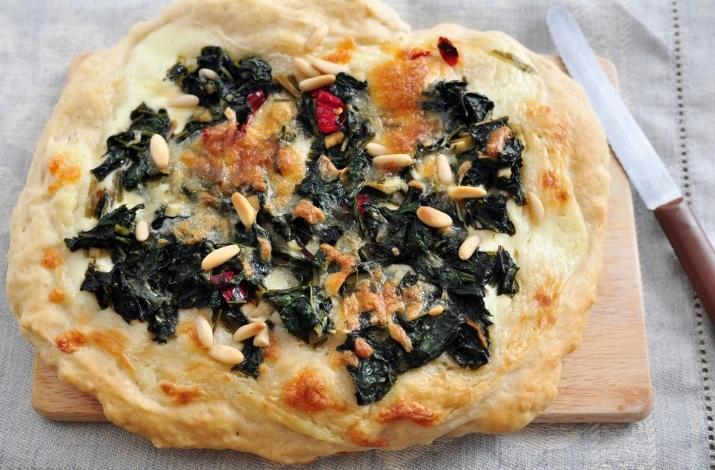
Preparation time: 10 minutes + inactive time
Cooking time: 15 minutes
Serve: 4
Ingredients:
Dough:
– 1 ½ cup mozzarella cheese, shredded
– 4oz. cream cheese
– 2 medium eggs, beaten
– 2/3 cup almond flour
– Salt, to taste
Topping:
– 1 tablespoon olive oil
– 1 clove garlic, minced
– ½ red bell pepper, seeded, sliced
– 1 ½ cups Swiss chard, torn into pieces
– 1 cup mozzarella cheese, torn into pieces
– 1 tablespoon pine nuts
– Salt, to taste
Instructions:
1. Place mozzarella and cream cheese in a microwave-safe bowl.
2. Microwave the mozzarella 30 seconds or until melted.
3. In the meantime, beat eggs in a small bowl. Fold in almond flour and a good pinch of salt.
4. Stir until you have sticky-dough consistency. Cover with cling wrap and refrigerate 30 minutes.
5. Preheat oven to 350F. Line baking tray with parchment paper. Transfer the chilled dough onto baking sheet and shape into a circle. Refrigerate 10 minutes more.
6. Heat olive oil in a skillet. Add garlic and cook 1 minute. Add bell pepper and cook for 5 minutes. Add Swiss chard and cook 2-3 minutes.
7. Spread the chard mixture over the pizza crust.
8. Top the pizza with mozzarella cheese and pine nuts. Bake the pizza 10-12 minutes.
9. Remove from the oven and slice. Serve warm.
Nutritional info per serving:
– Calories 497
– Total Fat 42.7g
– Total Carbohydrate 7.4g
– Dietary Fiber 1.9g
– Total Sugars 1.4g
– Protein 24.1g


Most Popular