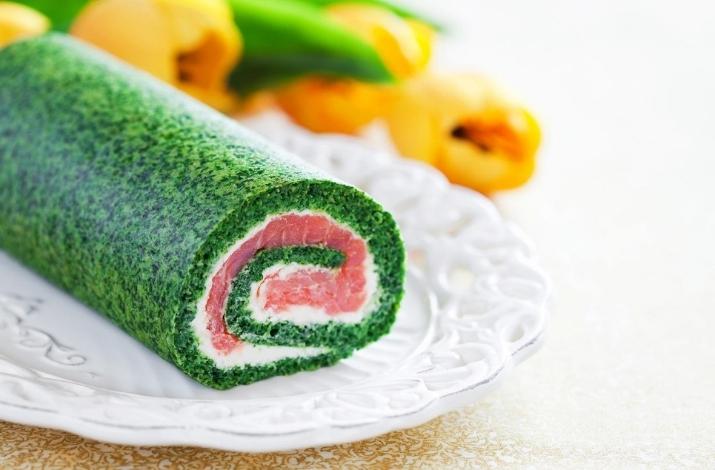
Smoked Salmon Breakfast Roll
Preparation time: 15 minutes + inactive time
Cooking time:15 minutes
Serve: 4
Ingredients:
6 medium eggs, separated
2 cups baby spinach
1 pinch nutmeg
Salt and pepper, to taste
Filling:
1 ½ cups cream cheese
1 tablespoon lemon juice
4.5oz. smoked salmon
Instructions:
Preheat oven to 375F.
Line 12×8-inch baking tin with parchment paper.
Combine baby spinach, egg yolks, and nutmeg in a food processor. Process until smooth.
Beat egg whites with a pinch of salt until stiff peaks form. Fold a little of the egg mixture into the spinach to loosen it. Add the spinach mixture to the rest of the egg whites and stir to combine. Season to taste with salt and pepper.
Spread the mixture into the baking tin and bake for 12-15 minutes. Cool slightly the invert onto a kitchen towel and allow to cool completely. Do not forget to peel the parchment paper.
In the meantime, cream together the cream cheese, and lemon juice.
Spread the cream cheese mixture over the spinach crust, leaving 1-inch free border. Cut the salmon into strips. Arrange the salmon strips on the shorter side of the spinach crust. Roll up like a swiss roll. Wrap in plastic foil and chill for 20 minutes before serving.
To serve; cut with a sharp knife into slices and serve.
Nutritional info per serving:
Calories 440
Total Fat 38.4g
Total Carbohydrate 3.5g
Dietary Fiber 0.4g
Total Sugars 0.8g
Protein 21.2g


Most Popular