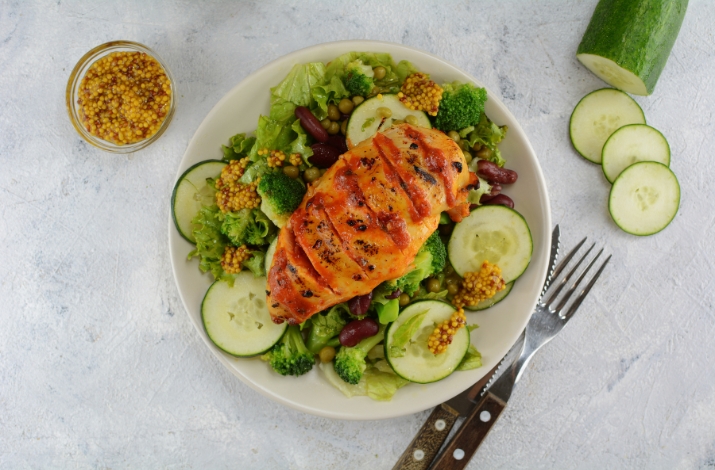
Tomato Chicken Protein Bowl
Recipe makes 2 servings
Ingredients:
1 chicken breast (about 170g/6 ounces)
1 Tbsp olive oil (for brushing)
3 Tbsp low-carb marinara
½ tsp dried oregano
½ tsp paprika
¼ tsp garlic powder
Salt and pepper to taste
1 cup broccoli florets, steamed
1 cup fresh lettuce, chopped
½ cucumber, sliced
2 Tbsp canned green peas, drained
2 Tbsp canned beans, drained
1 Tbsp olive oil (for drizzling)
1 tsp lemon juice
½ tsp mustard seeds (for garnish)
Fresh herbs like parsley or basil (optional, for garnish)
Instructions:
Preheat the oven to 400°F (200°C).
Brush the chicken breast with olive oil. Then, coat it with low-carb tomato sauce, dried oregano, paprika, garlic powder, salt, and pepper.
Place the chicken breast on a baking sheet and bake for 20-25 minutes, or until fully cooked. Let it rest for 5 minutes.
While the chicken is baking, steam the broccoli for about 5-7 minutes until tender but still slightly crisp.
Chop the lettuce and slice the cucumber. Drain and rinse the canned green peas and beans, using only a small amount to keep the carb count low.
In a large bowl, arrange the fresh lettuce, cucumber slices, steamed broccoli, green peas, and beans. Top with the prepared chicken.
Drizzle everything with olive oil, lemon juice, and sprinkle with more herbs and spices of your choice. Garnish with mustard seeds for a final touch.
Nutritional breakdown per serving (recipe makes 2 servings)
350 Calories
30.5g Protein
20g Fat
5g Fiber
13.5g Total Carbs
8.5g NET Carbs

Most Popular