Tuscan Shrimp with Spinach
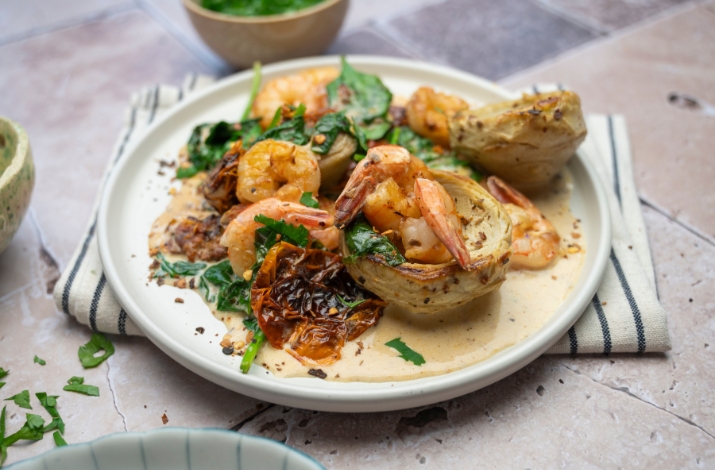
Recipe makes 4 servings
Ingredients:
1 lb raw shrimp, peeled and deveined (450 g)
1 Tbsp olive oil or avocado oil (15 ml)
2 garlic cloves, minced
½ tsp red pepper flakes (optional)
¾ cup heavy cream (180 ml)
¼ cup chicken broth (60 ml
¼ cup sun-dried tomatoes, chopped (about 30 g)
½ cup marinated artichoke hearts, drained and chopped (70 g)
3 cups fresh spinach (90 g)
¼ cup grated Parmesan cheese (25 g)
Salt and freshly ground black pepper, to taste
Fresh basil or parsley, for garnish
Instructions:
Heat the oil in a large skillet over medium-high heat.
While the oil is heating up, season the shrimp lightly with salt and pepper.
Sear the shrimp for about 1–2 minutes per side, just until pink and opaque.
Remove from the skillet and set aside.
Lower the heat to medium. Add the garlic and red pepper flakes to the same skillet and sauté for about 30 seconds, until fragrant.
Pour in the cream and chicken broth, stirring to combine.
Stir in the sun-dried tomatoes and artichokes. Simmer gently for about 4–5 minutes, allowing the sauce to thicken slightly.
Add the spinach and stir to wilt.
Stir in the Parmesan until melted and smooth.
Add the shrimp back to the skillet and gently toss to coat.
Cook for 1–2 minutes more, just to warm through. Adjust seasoning.
Garnish with fresh herbs and serve on its own or over cauliflower rice or zucchini noodles.
Nutritional breakdown per serving. Recipe makes 4 servings
360 Calories
26g Protein
28g Fat
2g Fiber
6g Total Carbs
4g NET Carbs


Most Popular