Whitefish With Cabbage And Fennel Salad
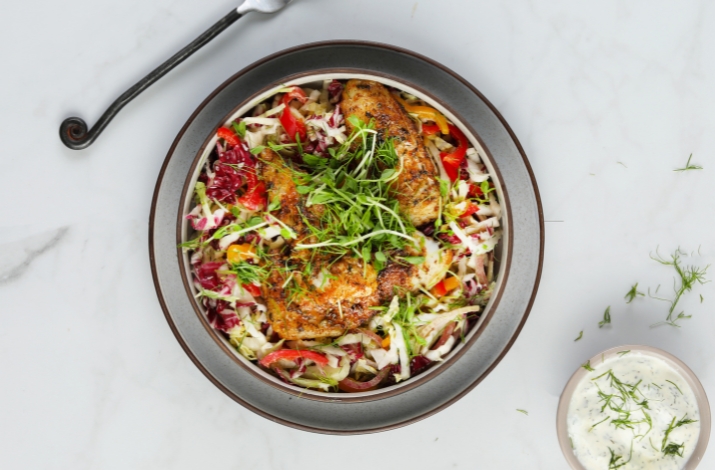
Makes 4 servings
Ingredients:
Salad:
4 (6oz/179g each) whitefish filets
Salt and pepper to taste
1/3 cup (34g) almond flour
1/4 tsp cayenne pepper
1/2 tsp each garlic powder
4 whitefish filets (6oz/170g each)
2 Tbsp (27ml) avocado oil or coconut oil
3 cups (170g) shredded red and green cabbage mix
2 small fennel bulbs (234g), thinly sliced, tops reserved for garnish
1 small bell pepper (64g), seeded and thinly sliced
1 avocado (136g), sliced
1 cup (64g) microgreens
1/4 cup (30g) sliced almonds
Lemon wedges, to serve
Dressing:
3 Tbsp (40ml) olive oil
2 Tbsp (29 ml) apple cider vinegar
1 Tbsp (15g) Dijon mustard
1/2 tsp dried thyme
Instructions:
Preheat the oven to 375°F (190°C).
Season the whitefish filets with salt and pepper to taste.
Combine almond flour, cayenne, and garlic powder in a small bowl; coat the fish with the mix.
On a stovetop, heat the avocado oil in a large oven-safe skillet over medium-high heat. Add the fish filets and cook for 3 to 4 minutes per side.
Transfer the skillet to the preheated oven and bake for about 8 minutes or until the fish is fork-tender and golden.
Mix cabbage, fennel, bell pepper, avocado, chopped fennel tops, microgreens, and sliced almonds.
In a small bowl, whisk all dressing ingredients and season with salt and pepper to taste; drizzle over the salad and toss well. Divide among four salad bowls and top with the fish filets.
Serve immediately.
Nutritional breakdown per serving (recipe makes 4 servings)
530 Calories
43.7g Protein
34.4g Fat
8.1g Fiber
15.8g Total Carbs
7.6g NET Carbs


Most Popular