9 Questions About Weight Loss, Answered by a Metabolic Scientist
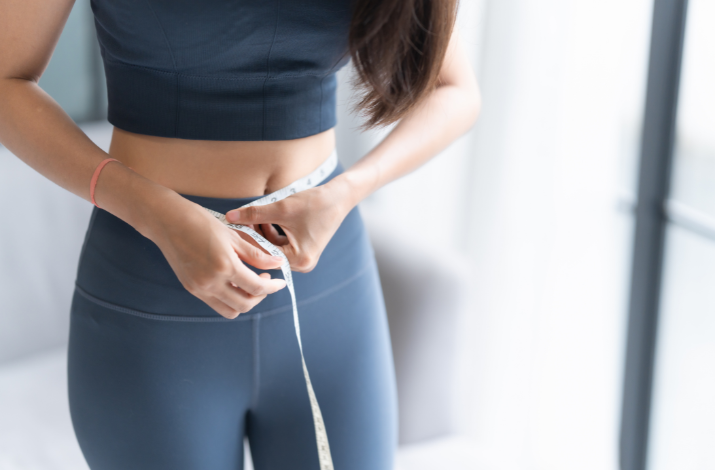
Fat loss and weight loss are related terms, but not interchangeable. This is because not all weight loss comes in the form of fat. Weight loss usually reduces both fat mass and lean mass rather than fat alone. At the same time, preserving lean tissue remains relevant for strength, function, metabolic rate, and sarcopenia risk, particularly in older adults.
There are many common questions and misconceptions surrounding best practices for losing weight and losing fat mass. Let’s look at what the sciences says and answer some common questions surrounding this topic.
Diet-Only Questions
1) How much fat vs lean tissue can be lost with diet alone?
Diet-only weight loss usually reduces both fat mass and lean mass, with a commonly cited average that about 25% of lost weight comes from fat-free mass and about 75% from fat mass [1]. In one randomized diet trial, participants lost 4.2 kg of fat and 2.1 kg of lean mass at 6 months, showing that lean tissue loss is measurable even when most of the loss is fat [2]. Across caloric-restriction studies, about 20% to 30% of lost weight can be unrelated to fat mass, although the exact proportion varies with age, baseline adiposity, and intervention design [3].
2) Does the macronutrient mix of the diet change body composition much?
A 12-week study in women found that all diet patterns reduced fat mass, but some macronutrient-redistributed diets, especially higher-protein patterns, outperformed time-restricted eating and very-low-energy dieting for fat-mass reduction by the end of follow-up [4]. The broader message is that calorie reduction drives weight loss, but diet quality and protein distribution appear to influence how much lean tissue is preserved. If you want to keep lean tissue around, ensure that you are getting adequate protein.
3) Is faster weight loss worse for muscle?
Severe energy restriction can produce more total weight loss and more total fat loss, but it also causes more absolute lean-mass loss than moderate restriction [5]. Because of this, the science suggests that slower, sustained loss is generally more favorable for lean-mass preservation, especially when very large calorie deficits accelerate tissue loss 0.
Exercise Questions
4) How does adding exercise change the fat-to-lean loss ratio?
Adding exercise generally shifts weight loss toward more fat loss and less lean-mass loss than dieting alone [6]. In older pooled data reviewed critically by Heymsfield and colleagues, exercise during dieting reduced the fraction of weight loss coming from fat-free mass from about 0.27 to roughly 0.13 to 0.17 in supervised programs [6]. A 2026 meta-analysis similarly found that lifestyle programs plus resistance training had the most favorable profile, with lean mass making up about 17.5% of total weight lost, compared with 26.2% in lifestyle intervention alone [7].
5) Is resistance training the best way to preserve lean mass?
Resistance training has the strongest evidence for lean-mass preservation during weight loss [1,8,9]. A recent meta-analysis found that adding resistance exercise to dietary restriction increased fat loss and significantly reduced fat-free-mass loss compared with diet alone [1]. Across the lifespan, resistance-based programs also maintained lean mass during caloric restriction and, when done alone, increased lean mass by about 0.8 kg compared with no-training controls [8].
6) What about aerobic exercise?
Aerobic exercise adds modest average weight loss, usually about 2 to 3 kg, and also reduces total fat and visceral fat [9,10]. Compared with resistance training alone, longer aerobic programs can reduce more absolute fat mass, but they typically preserve fat-free mass less effectively [11]. That makes aerobic training useful for energy expenditure and abdominal fat reduction, but not usually the best standalone choice if preserving muscle is the main goal.
7) Is combining aerobic and resistance exercise better than either alone?
Combined programs generally perform best for overall body composition, because aerobic work supports fat loss while resistance training supports muscle retention [11-13]. A network meta-analysis ranked calorie restriction plus exercise as the best overall strategy for reducing weight and body-fat percentage while maintaining lean mass [12]. Randomized trials using calorie reduction plus more physical activity also show meaningful reductions in total fat and visceral fat with little or no lean-mass penalty in some groups [13].
Body Fat Pattern Questions
8) Why is abdominal and visceral fat a bigger health concern?
Central and visceral fat (fat around the abdominal organs) are more strongly linked to cardiometabolic risk than lower-body fat stores [14,15]. Reviews on adipose biology note that the typical female gluteofemoral pattern (storing adipose around the thighs) is associated with lower cardiometabolic risk, while male-pattern central obesity is more harmful metabolically [14,16]. This is why improvements in waist circumference, trunk fat, and visceral fat can matter as much as total pounds lost.
9) Do men and women lose fat differently?
Men and women differ in both fat distribution and weight-loss response [14,16]. Women generally carry more total body fat and more gluteofemoral fat, while men more often accumulate central visceral fat. In the POUNDS LOST trial, women lost more visceral fat than men relative to total-body fat loss, and a 2024 network meta-analysis suggested that exercise plus time-restricted feeding may preserve lean mass best in women, whereas calorie restriction plus exercise ranked best in men [2,12].
Final Takeaway
The most consistent message is that lifestyle modification works best when it combines better dietary habits with more physical activity rather than relying on weight loss alone. If the goal is higher-quality weight loss, the evidence most strongly supports a moderate calorie deficit, regular aerobic activity for fat and visceral-fat reduction, and resistance training to preserve or even improve lean mass. These recommendations fall in line with the American College of Sports Medicine’s Physical Activity Guidelines which recommend that adults move more and sit less, and suggests a minimum of 150 minutes (30 minutes per day, 5 days per week) of moderate-intensity exercise per week with 2 of those days being committed to muscle strengthening activities/resistance training [17]. At the end of the day, losing weight is generally beneficial. Improving our lean tissue health and reducing central and visceral adipose will bring about many positive health benefits beyond just what the weight scale is showing.
References
-
-
- Binmahfoz A, Dighriri A, Gray C, Gray SR. Effect of resistance exercise on body composition, muscle strength and cardiometabolic health during dietary weight loss in people living with overweight or obesity: a systematic review and meta-analysis. BMJ Open Sport & Exercise Medicine. 2025;11. doi:10.1136/bmjsem-2024-002363
- De Souza RD, Bray G, Carey V, et al. Effects of 4 weight-loss diets differing in fat, protein, and carbohydrate on fat mass, lean mass, visceral adipose tissue, and hepatic fat: results from the POUNDS LOST trial.. The American journal of clinical nutrition. 2012;95 3:614-25. doi:10.3945/ajcn.111.026328
- Bolte J, Smelter AA, Norton L. Are we giving too much weight to lean mass loss?. Molecular Metabolism. 2025;101. doi:10.1016/j.molmet.2025.102253
- Pescari, D., Mihuta, M.-S., Bena, A., & Stoian, D. (2024). Quantitative analysis of the caloric restriction versus isocaloric diets models based on macronutrients composition: impacts on body weight regulation, anthropometric, and bioimpedance parameters in women with obesity. Frontiers in Nutrition, 11. https://doi.org/10.3389/fnut.2024.1493954
- Seimon, R., Wild-Taylor, A. L., Keating, S., McClintock, S., Harper, C., Gibson, A., Johnson, N., Fernando, H. A., Markovic, T., Center, J. R., Franklin, J., Liu, P. Y., Grieve, S., Lagopoulos, J., Caterson, I., Byrne, N., & Sainsbury, A. (2019). Effect of Weight Loss via Severe vs Moderate Energy Restriction on Lean Mass and Body Composition Among Postmenopausal Women With Obesity. JAMA Network Open, 2, e1913752 – e1913752. https://doi.org/10.1001/jamanetworkopen.2019.13733
- Heymsfield, S., Gonzalez, C. M., Shen, W., Redman, L., & Thomas, D. M. (2014). Weight Loss Composition is One-Fourth Fat-Free Mass: A Critical Review and Critique of This Widely Cited Rule. Obesity reviews : an official journal of the International Association for the Study of Obesity, 15, 310 – 321. https://doi.org/10.1111/obr.12143
- Eisa, N., & Barood, O. (2026). Lean Mass Changes With Incretin Therapy Versus Lifestyle Intervention: A Systematic Review and Meta‐Analysis of Randomised Controlled Trials. Diabetes, 28, 4818 – 4827. https://doi.org/10.1111/dom.70666
- Lopez, P., Taaffe, D., Galvão, D., Newton, R. U., Nonemacher, E. R., Wendt, V. M., Bassanesi, R. N., Turella, D., & Rech, A. (2022). Resistance training effectiveness on body composition and body weight outcomes in individuals with overweight and obesity across the lifespan: A systematic review and meta‐analysis. Obesity Reviews, 23. https://doi.org/10.1111/obr.13428
- Oppert, J., Ciangura, C., & Bellicha, A. (2023). Physical activity and exercise for weight loss and maintenance in people living with obesity. Reviews in Endocrine and Metabolic Disorders, 1-13. https://doi.org/10.1007/s11154-023-09805-5
- Bellicha, A., Van Baak, M. V., Battista, F., Beaulieu, K., Blundell, J., Busetto, L., Carraça, E., Dicker, D., Encantado, J., Ermolao, A., Farpour-Lambert, N., Pramono, A., Woodward, E., & Oppert, J. (2021). Effect of exercise training on weight loss, body composition changes, and weight maintenance in adults with overweight or obesity: An overview of 12 systematic reviews and 149 studies. Obesity Reviews, 22. https://doi.org/10.1111/obr.13256
- Lafontant, K., Rukstela, A., Hanson, A., Chan, J., Alsayed, Y., Ayers-Creech, W. A., Bale, C., Ohigashi, Y., Solis, J., Shelton, G., Alur, I., Resler, C., Heath, A., Ericksen, S., Forbes, S. C., & Campbell, B. I. (2025). Comparison of concurrent, resistance, or aerobic training on body fat loss: a systematic review and meta-analysis. Journal of the International Society of Sports Nutrition, 22. https://doi.org/10.1080/15502783.2025.2507949
- Xie, Y., Gu, Y., Li, Z., He, B., & Zhang, L. (2024). Effects of Different Exercises Combined with Different Dietary Interventions on Body Composition: A Systematic Review and Network Meta-Analysis. Nutrients, 16. https://doi.org/10.3390/nu16173007
- Schenk, J., Gulati, R., Beatty, S. J., Plymate, S. R., Lin, D. W., Dash, A., Porter, M. P., VanDoren, M., Wright, J. L., & Neuhouser, M. L. (2025). Reduced adipose tissue with limited loss of lean mass after weight loss: results from the Prostate Active Lifestyle Study. Journal of the National Cancer Institute. https://doi.org/10.1093/jnci/djaf113
- Karastergiou, K., Smith, S. R., Greenberg, A., & Fried, S. (2012). Sex differences in human adipose tissues – the biology of pear shape. Biology of Sex Differences, 3, 13 – 13. https://doi.org/10.1186/2042-6410-3-13
- Wu, X., Zhang, C., Liang, Z., Liang, Y., Li, Y., & Qiu, J. (2024). Exercise Combined with a Low-Calorie Diet Improves Body Composition, Attenuates Muscle Mass Loss, and Regulates Appetite in Adult Women with High Body Fat Percentage but Normal BMI. Sports, 12. https://doi.org/10.3390/sports12040091
- Chang, E., Varghese, M., & Singer, K. (2018). Gender and Sex Differences in Adipose Tissue. Current diabetes reports, 18, 69 – 69. https://doi.org/10.1007/s11892-018-1031-3
- Garber CE, Blissmer B, Deschenes MR, et al. American College of Sports Medicine position stand. Quantity and quality of exercise for developing and maintaining cardiorespiratory, musculoskeletal, and neuromotor fitness in apparently healthy adults: guidance for prescribing exercise. Med Sci Sports Exerc. 2011;43(7):1334-1359. doi:10.1249/MSS.0b013e318213fefb
-
This article is for informational and educational purposes only. It is not, nor is it intended to be substitute for professional medical advice, diagnosis, or treatment and should never be relied upon for specific medical advice.

Most Popular