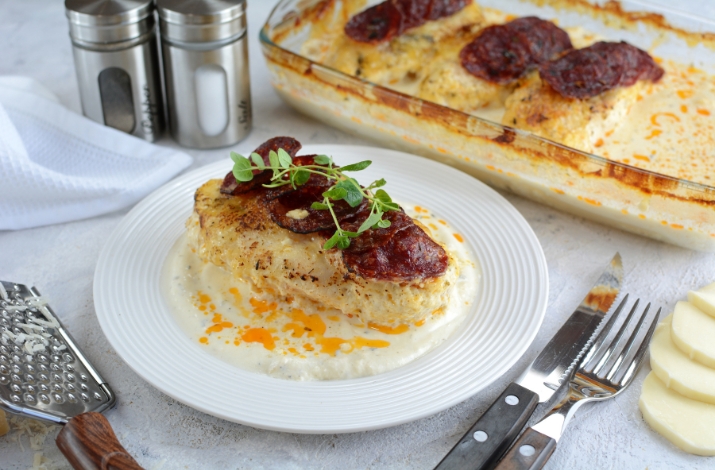
Baked Chicken with Pepperoni and Bechamel Sauce
Recipe makes 4 servings
Ingredients:
4 chicken breasts (about 24 oz / 680 g total)
Salt, to taste
Black pepper, to taste
1 tsp dried thyme
For the Béchamel Sauce:
2 Tbsp butter
2 Tbsp almond flour
2 cups unsweetened almond milk
Salt and pepper, to taste
Pinch of ground nutmeg (optional)
Topping:
2 oz (55 g) sliced pepperoni
Instructions:
Pat the chicken breasts dry with a paper towel. Season both sides with salt, black pepper, and dried thyme. Set aside while preparing the sauce.
In a saucepan, melt the butter over medium heat.
Once melted, add the almond flour and whisk continuously for about 1 minute.
Gradually pour in the almond milk while whisking, making sure there are no lumps. Continue to cook and stir until the sauce thickens and coats the back of a spoon. Season with salt, pepper, and a pinch of nutmeg if using.
Preheat the oven to 375°F (190°C). Pour the béchamel sauce into the bottom of a baking dish (approximately 9 x 13 inches / 23 x 33 cm). Nestle the seasoned chicken breasts into the sauce. Top each piece with slices of pepperoni.
Cover the dish with foil and bake for about 30-35 minutes, depending on the thickness of the chicken. Remove the foil during the last 5 minutes of baking to allow the pepperoni to crisp slightly.
Let rest a few minutes before serving. This dish pairs well with roasted vegetables, cauliflower mash, or a crisp green salad.
Nutritional breakdown per serving (recipe makes 4 servings)
455 Calories
56.5g Protein
23g Fat
0.75g Fiber
2.5g Total Carbs
1.75g NET Carbs


Most Popular