What Chronic Stress Does to Your Metabolism
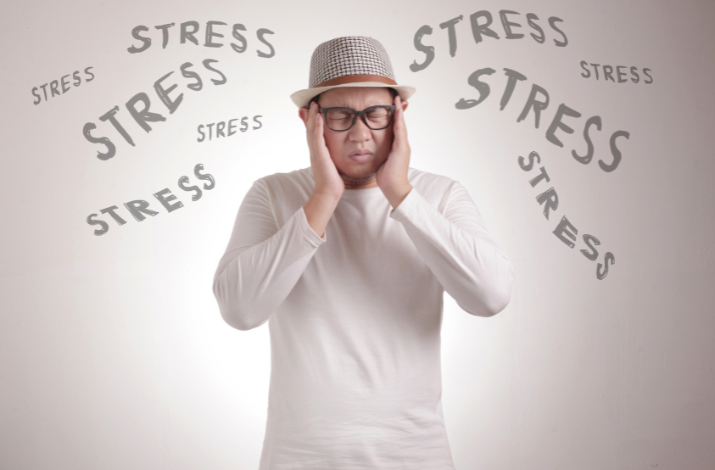
You’re eating less, you’re moving more, you’re doing everything the internet told you to do, and the scale hasn’t moved in months. When chronic stress takes over, cortisol can become chronically elevated. This causes your metabolism to suffer, and your thyroid will likely pay the price. Once you understand what chronic stress is doing to your thyroid, weight-loss resistance stops feeling like a mystery.
Cortisol is known as the survival hormone. In acute stress, it does its job very well. It helps to mobilize fuel and regulate blood pressure, keeping the body functional under pressure. The issue isn’t the hormone itself. The issue is what happens when stress becomes the baseline. Cortisol was never designed for constant activation, and the body pays the price when it runs that way over the long term. When your body is fielding chronic stressors, poor sleep, undereating, over-training, blood sugar swings, and emotional pressure, the system that was designed to save your life in an emergency starts working against you. Just two nights of sleep restriction have been shown to increase evening free cortisol by 200%. Another study showed that just 14 days of sleep restriction increased daily caloric intake by 308 kcal and caused an ~11% increase in visceral fat. Chronic psychological and social stress, like caregiving burdens, social strain, and work shifts, has all been associated with flattened diurnal cortisol rhythms and elevated evening cortisol. [1, 2, 3, 5]
It should come as no surprise that there is often weight gain associated with long-term stress and chronic cortisol elevation. Cortisol preferentially dumps fat around your midsection, while simultaneously blocking insulin signaling and driving hyperinsulinemia, making the problem worse. It hijacks your appetite too, it activates hunger hormones, blunts satiety signals, and increases the reward value of calorie-dense foods. Stress eating is a neurochemical response [4,6].
So, what role does the thyroid hormones play in all of this? Thyroid hormones (T3 and T4) are key determinants of metabolic rate, regulating energy expenditure, thermogenesis, and the metabolism of all macronutrients. The HPA and HPT (hypothalamic-pituitary-thyroid) axes are tightly interconnected, especially during times of stress. Stress hormones like CRH and cortisol can “turn down” your thyroid by reducing the signals (TSH) that tell it to do its job. On top of this, cortisol makes it more problematic for your body to convert T4 into T3, which is the active form your metabolism actually uses. Over time, this leads to lower overall thyroid output, something we consistently see in chronic stress situations [7,8].
The presentation of stress-related cortisol and thyroid dysfunction is one of the most commonly missed patterns in medicine. Chronic stress produces a recognizable pattern driven by two simultaneous, sustained processes: cortisol elevation and functional suppression of thyroid hormone activity. People describe themselves as “tired but wired” with difficulty recovering from exertion. Central abdominal/visceral weight gain, sometimes even in the face and upper trunk, despite no change in caloric intake. There is often sleep disruption, as well as mood and cognitive changes. [9, 10, 11].
The good news is that the same biology that can sometimes work against you is also highly responsive to targeted intervention and purposeful treatments. Ashwagandha has the strongest evidence base of any adaptogen for cortisol reduction. A 2026 meta-analysis of over 1,700 patients found it significantly lowered cortisol and modestly raised T4, making it particularly helpful if thyroid function is a part of your picture. Magnesium at 300–350 mg/day has been shown to reduce 24-hour urinary cortisol excretion and blunt HPA axis hyperactivity, with B6 amplifying those effects in people under severe stress. Vitamin C at 1,000 mg/day cut elevated cortisol nearly in half in women with functional hypercortisolemia over just two months. Omega-3s reduce ACTH, CRF expression, and systemic inflammation that keeps the HPA axis in overdrive. Strength-based exercise, not chronic cardio, directly reduces HPA axis sensitivity to stress. This in turn improves insulin signaling and shifts your metabolism toward fat oxidation rather than fat storage. Mindfulness and relaxation practices add another layer of cortisol dampening when practiced consistently. [12, 13, 14, 15, 16]
References
-
-
- Russell, G., & Lightman, S. (2019). The human stress response. Nature reviews. Endocrinology, 15(9), 525–534. https://doi.org/10.1038/s41574-019-0228-0
- Guyon, A., Balbo, M., Morselli, L. L., Tasali, E., Leproult, R., L’Hermite-Balériaux, M., Van Cauter, E., & Spiegel, K. (2014). Adverse effects of two nights of sleep restriction on the hypothalamic-pituitary-adrenal axis in healthy men. The Journal of clinical endocrinology and metabolism, 99(8), 2861–2868. https://doi.org/10.1210/jc.2013-4254
- Bevans M, Sternberg EM. Caregiving Burden, Stress, and Health Effects Among Family Caregivers of Adult Cancer Patients. JAMA. 2012;307(4):398–403. doi:10.1001/jama.2012.29
- Schwartz, M. W., & Seeley, R. J. (1997). Neuroendocrine responses to starvation and weight loss. New England Journal of Medicine, 336(25), 1802–1811. https://doi.org/10.1056/NEJM199706193362507
- Covassin, N., Singh, P., McCrady-Spitzer, S. K., St Louis, E. K., Calvin, A. D., Levine, J. A., & Somers, V. K. (2022). Effects of Experimental Sleep Restriction on Energy Intake, Energy Expenditure, and Visceral Obesity. Journal of the American College of Cardiology, 79(13), 1254–1265. https://doi.org/10.1016/j.jacc.2022.01.038
- Adam, T. C., & Epel, E. S. (2007). Stress, eating and the reward system. Physiology & behavior, 91(4), 449–458. https://doi.org/10.1016/j.physbeh.2007.04.011
- Helmreich, D. L., Parfitt, D. B., Lu, X. Y., Akil, H., & Watson, S. J. (2005). Relation between the hypothalamic-pituitary-thyroid (HPT) axis and the hypothalamic-pituitary-adrenal (HPA) axis during repeated stress. Neuroendocrinology, 81(3), 183–192. https://doi.org/10.1159/000087001
- Zhang, J., Huang, J., Aximujiang, K., Xu, C., Ahemaiti, A., Wu, G., Zhong, L., & Yunusi, K. (2018). Thyroid Dysfunction, Neurological Disorder and Immunosuppression as the Consequences of Long-term Combined Stress. Scientific reports, 8(1), 4552. https://doi.org/10.1038/s41598-018-19564-y
- Ring M. (2025). An Integrative Approach to HPA Axis Dysfunction: From Recognition to Recovery. The American journal of medicine, 138(10), 1451–1463. https://doi.org/10.1016/j.amjmed.2025.05.044
- Malykhin, N., Serrano, J., Hegadoren, K., & Pietrasik, W. (2026). Sex differences in impact of daily and chronic psychological stressors on diurnal cortisol level. Pharmacology, biochemistry, and behavior, 261, 174165. https://doi.org/10.1016/j.pbb.2026.174165
- Juruena, M. F., Eror, F., Cleare, A. J., & Young, A. H. (2020). The Role of Early Life Stress in HPA Axis and Anxiety. Advances in experimental medicine and biology, 1191, 141–153. https://doi.org/10.1007/978-981-32-9705-0_9
- Fornalik, M., Malkiewicz, A., Adamczak, D., Nawrocki, F., Zielinska, A., & Mondal, S. A. (2026). Hormonal Modulation with Withania somnifera: Systematic Review and Meta-Analysis of Randomized-controlled Trials. Planta medica, 10.1055/a-2802-8363. Advance online publication. https://doi.org/10.1055/a-2802-8363
- Schutten, J. C., Joris, P. J., Minović, I., Post, A., van Beek, A. P., de Borst, M. H., Mensink, R. P., & Bakker, S. J. L. (2021). Long-term magnesium supplementation improves glucocorticoid metabolism: A post-hoc analysis of an intervention trial. Clinical endocrinology, 94(2), 150–157. https://doi.org/10.1111/cen.14350
- Beglaryan, N., Hakobyan, G., & Nazaretyan, E. (2024). Vitamin C supplementation alleviates hypercortisolemia caused by chronic stress. Stress and health : journal of the International Society for the Investigation of Stress, 40(3), e3347. https://doi.org/10.1002/smi.3347
- De Nys, L., Anderson, K., Ofosu, E. F., Ryde, G. C., Connelly, J., & Whittaker, A. C. (2022). The effects of physical activity on cortisol and sleep: A systematic review and meta-analysis. Psychoneuroendocrinology, 143, 105843. https://doi.org/10.1016/j.psyneuen.2022.105843
- Rogerson, O., Wilding, S., Prudenzi, A., & O’Connor, D. B. (2024). Effectiveness of stress management interventions to change cortisol levels: a systematic review and meta-analysis. Psychoneuroendocrinology, 159, 106415. https://doi.org/10.1016/j.psyneuen.2023.106415
-
This article is for informational and educational purposes only. It is not, nor is it intended to be substitute for professional medical advice, diagnosis, or treatment and should never be relied upon for specific medical advice.


Most Popular