Baked Feta cheese with Avocado salad and Chicken drumsticks
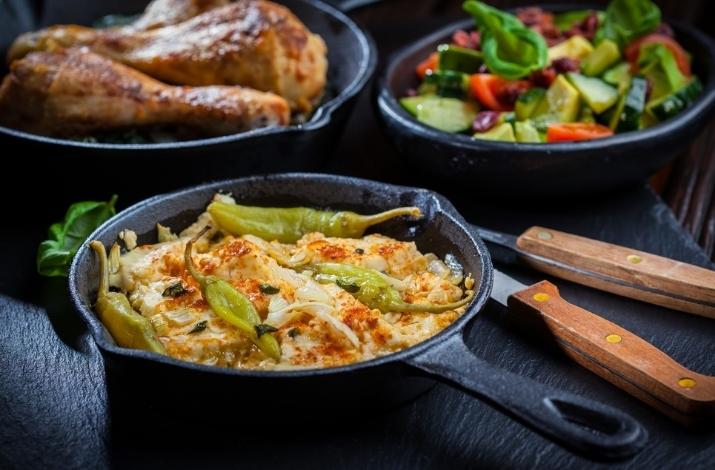
Preparation time: 10 minutes
Cooking time: 30 minutes
Serves: 4
Ingredients:
Chicken drumsticks:
– 4 chicken drumsticks, skin on, bone-in
– 1 tablespoon butter
– Salt and pepper, to taste
Feta cheese:
– 8oz. feta cheese, drained
– 2 jalapeno peppers
– ½ teaspoon dried oregano
– 2 tablespoons olive oil
Avocado salad:
– 1 small avocado, peeled, pitted
– 1 cucumber, peeled, sliced
– 1 cup baby spinach
– 2 tablespoons olive oil
– 1 tablespoon lemon juice
– Salt and pepper, to taste
Instructions:
1. Preheat oven to 400F. Prepare two small baking pans.
2. Rub the chicken drumsticks with butter and season to taste. Place the chicken in one baking dish.
3. Place the feta cheese into the second baking dish. Top the feta cheese with jalapenos, and basil.
4. Drizzle the cheese and jalapenos with olive oil.
5. Place both baking dishes in the oven. Bake the feta cheese 20 minutes, and chicken drumsticks 25-30 minutes.
6. In the meantime, make the salad; slice the avocado and cucumber. Place in a bowl and toss in baby spinach. In a small bowl, whisk olive oil, lemon juice, and salt and pepper, to taste.
7. Pour the mixture over the salad. Toss to combine.
8. Serve Feta with chicken drumsticks and fresh avocado salad.
Nutritional info per serving:
– Calories 424
– Total Fat 37.4g
– Total Carbohydrate 6.5g
– Dietary Fiber 3.6g
– Total Sugars 3g
– Protein 17.4g


Most Popular