Chinese Chicken Meatballs
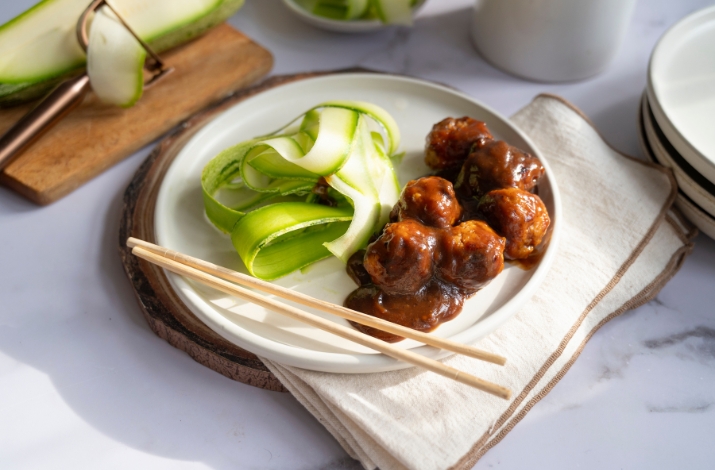
Recipe makes 4 servings
Ingredients:
For the Chicken Meatballs
1 lb (500 g) ground chicken
1 medium egg
1 garlic clove, minced
1 tsp grated ginger
1 tsp (5 ml) sesame oil
1 spring onion, finely chopped
2 Tbsp (14 g) almond flour
Pinch of white pepper
3 Tbsp (48 g) smooth peanut butter
3 Tbsp (45 ml) soy sauce or tamari
1 Tbsp (15 ml) rice vinegar
1 tsp monk fruit sweetener
1 Tbsp (15 ml) toasted sesame oil
3–4 Tbsp water
For the Zucchini Ribbons
3 medium zucchinis
1 tsp (5 ml) sesame oil
1 tsp (5 ml) rice vinegar
Salt, to taste
Instructions:
Use a vegetable peeler to shave long, thin ribbons from the zucchinis.
Toss with sesame oil, rice vinegar, and a pinch of salt.
Set aside and allow to soften naturally, while you make the meatballs.
In a bowl, combine the ground chicken, egg, garlic, ginger, soy/tamari, sesame oil, spring onions, almond flour, and a pinch of white pepper.
Mix gently and shape into about 20 small meatballs.
Heat a non-stick skillet with a little oil over medium heat. Cook the meatballs for 8–10 minutes, turning until golden and cooked through.
Whisk together the peanut butter with the soy/tamari, rice vinegar, monk fruit, and sesame oil.
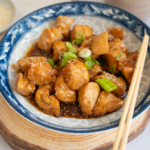
Add water gradually until smooth, glossy, and pourable, and add to the pan with the meatballs. Toss to cover them evenly and add a bit of extra water if needed to thin the sauce more.
Serve the meatballs and sauce with a side of the zucchini ribbons.
Nutritional breakdown per serving. Recipe makes 4 servings
342 Calories
27g Protein
22g Fat
3g Fiber
8g Total Carbs
5g NET Carbs

Most Popular