Mini Cheesy Buffalo Chicken Wraps
Recipe makes 6 servings
Ingredients:
For the chicken:
1lb (453g) chicken tenders (or chicken breasts), cut into bite-sized pieces
Salt and freshly ground black pepper
2 Tbsp (28g) avocado oil (or olive oil)
1/2 tsp (1g) smoked paprika
1 tsp (5 ml) hot sauce
1 tsp (5g) garlic powder
2 Tbsp (28g) unsalted butter
For the sauce:
1/2 cup (100g) mayonnaise
1/2 Tbsp (10g) hot sauce
1/3 cup (70g) sour cream
2 Tbsp (28g) cream cheese
1 Tbsp (14g) apple cider vinegar
For the wraps:
1/2 head of butter lettuce (85g), separated into leaves
1 avocado (135g), peeled, pitted, and thinly sliced
1/2 cup (100g) cherry tomatoes, halved
4 Tbsp (26g) shredded cheese such as cheddar
2 Tbsp (2g) chopped cilantro
Instructions:
Season the chicken with salt and pepper and place in a bowl or resealable bag; add avocado oil, hot sauce, smoked paprika, and garlic powder; cover and refrigerate for about half an hour.
Melt the butter in a large saucepan over medium heat; add the chicken and cook, stirring occasionally, until fully cooked, 8 to 10 minutes.
Meanwhile, whisk all sauce ingredients until smooth, taste and adjust the seasoning.
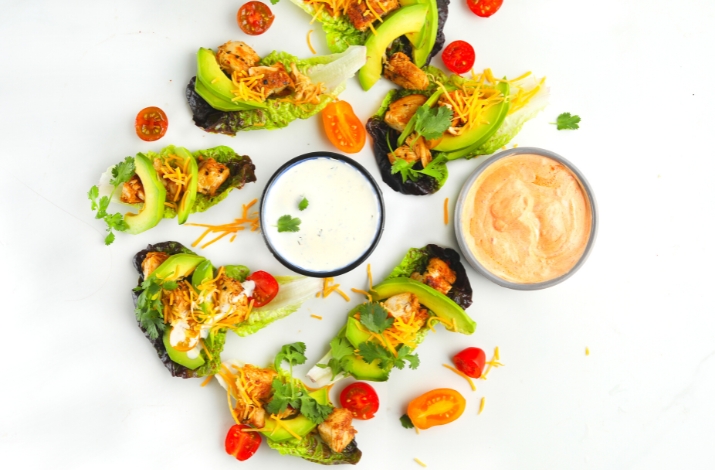
Arrange the lettuce leaves on a serving platter and top each one with chicken, avocado slices, cherry tomatoes, cheese, and sprinkle with cilantro. Drizzle with the dressing and serve immediately.
Nutritional breakdown per serving (the recipe makes 6 servings)
347 Calories
19.4g Protein
29.6g Fat
1.8g Fiber
3.4g Total Carbs
1.6g NET Carbs


Most Popular