Slow-Baked Ribs with Creamed Spinach
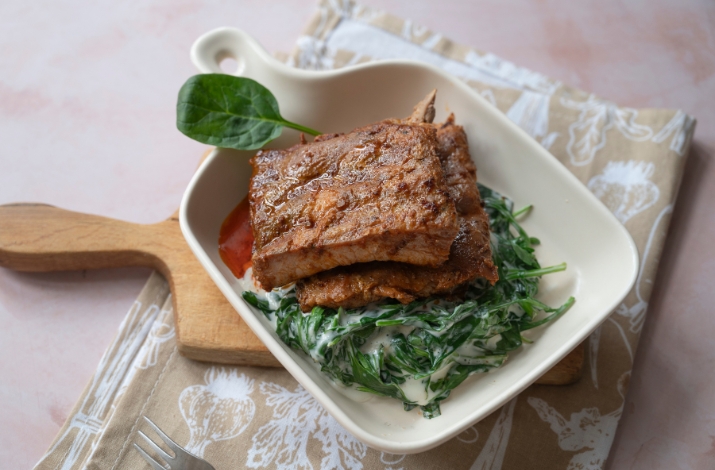
Recipe makes 4 servings
Ingredients:
For the Ribs
2 lb (900 g) pork ribs (baby back or spare ribs)
2 Tbsp olive oil (30 ml)
1 tsp smoked paprika
1 tsp garlic powder
1 tsp onion powder
½ tsp ground black pepper
1 tsp salt
Optional: ½ tsp chili flakes for heat
For the Creamed Spinach
1 lb (450 g) fresh spinach
1 Tbsp butter (14 g)
1 cup heavy cream (240 ml)
½ cup grated Parmesan cheese (50 g)
1 garlic clove, minced
Salt and black pepper to taste
Pinch of nutmeg (optional)
Instructions:
Preheat the oven to 160°C (325°F).
Pat the ribs dry.
Mix the olive oil with paprika, garlic powder, onion powder, salt, pepper, and chili flakes. Rub evenly over the ribs.
Wrap the ribs tightly in parchment paper and place on a baking tray.
Bake for 2½ hours, until very tender.
Unwrap and broil for 5 minutes to caramelize the surface.
Add the spinach to a large pan over medium heat and cook until wilted. Drain excess liquid well.
In the same pan, melt the butter and sauté the garlic for 30 seconds.
Add the cream and simmer gently for 3–4 minutes.
Stir in the grated Parmesan, spinach, nutmeg (if using), salt, and pepper.
Cook for 2–3 minutes until thick and creamy.
Serve the ribs with a generous spoonful of creamed spinach on the side.
Nutritional breakdown per serving. Recipe makes 4 servings
720 Calories
38g Protein
58g Fat
3g Fiber
7g Total Carbs
4g NET Carbs


Most Popular