Chicken Mushroom Casserole
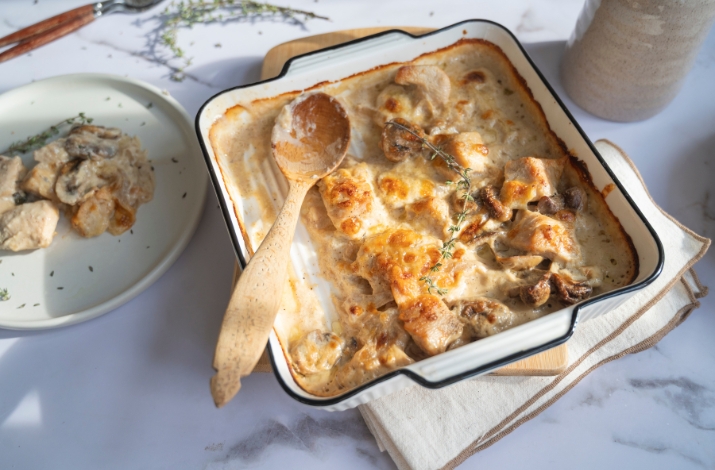
Recipe makes 4 servings
Ingredients:
1.5 lb (680 g) chicken breast, cut into bite-size pieces
2 Tbsp olive oil (30 ml), divided
8 oz (225 g) mushrooms, sliced
1 small onion, diced (optional)
2 garlic cloves, minced
1 cup (240 ml) heavy cream
½ cup (120 ml) chicken broth
½ cup (50 g) grated Parmesan
1 tsp dried thyme
½ tsp black pepper
¾ tsp salt
½ tsp paprika (optional)
½ cup (55 g) shredded mozzarella
Fresh parsley, to garnish
Instructions:
Preheat the oven at 400°F (200°C)
Heat one tablespoon of the olive oil in a large non-stick skillet over medium-high heat.
Cook the chicken for about 5 minutes, until lightly golden seasoning with salt and pepper.
Transfer to a baking dish.
Add the remaining olive oil to the skillet and cook the mushrooms and onion, for 5–6 minutes until softened.
Add the garlic and cook for another minute.
Pour in the heavy cream and the chicken broth.
Add Parmesan, thyme, paprika, and a bit of salt, and pepper and simmer for about 3–4 minutes until slightly thickened.
Pour the mushroom cream sauce over the cooked chicken in the baking dish.
Top with shredded mozzarella cheese and bake for about 15 minutes, until the top is bubbling and lightly golden.
Garnish with fresh parsley and serve warm.
Nutritional breakdown per serving. Recipe makes 4 servings
455 Calories
39g Protein
30g Fat
1g Fiber
5g Total Carbs
4g NET Carbs


Most Popular