Chocolate Protein Mug Cake
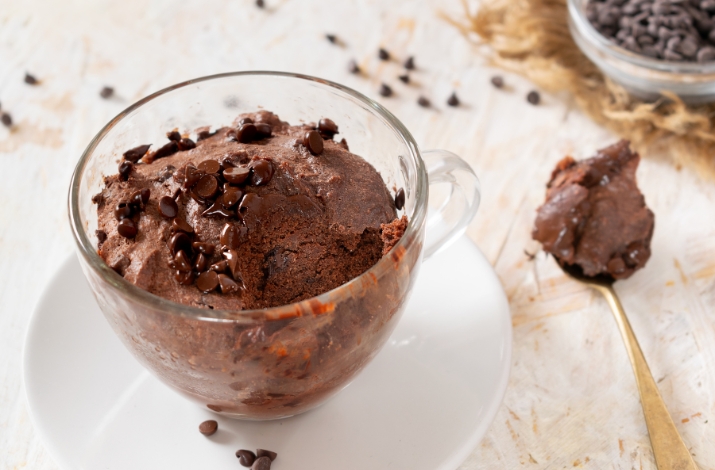
Recipes makes 1 serving
Ingredients:
2 Tbsp (15 g) coconut flour
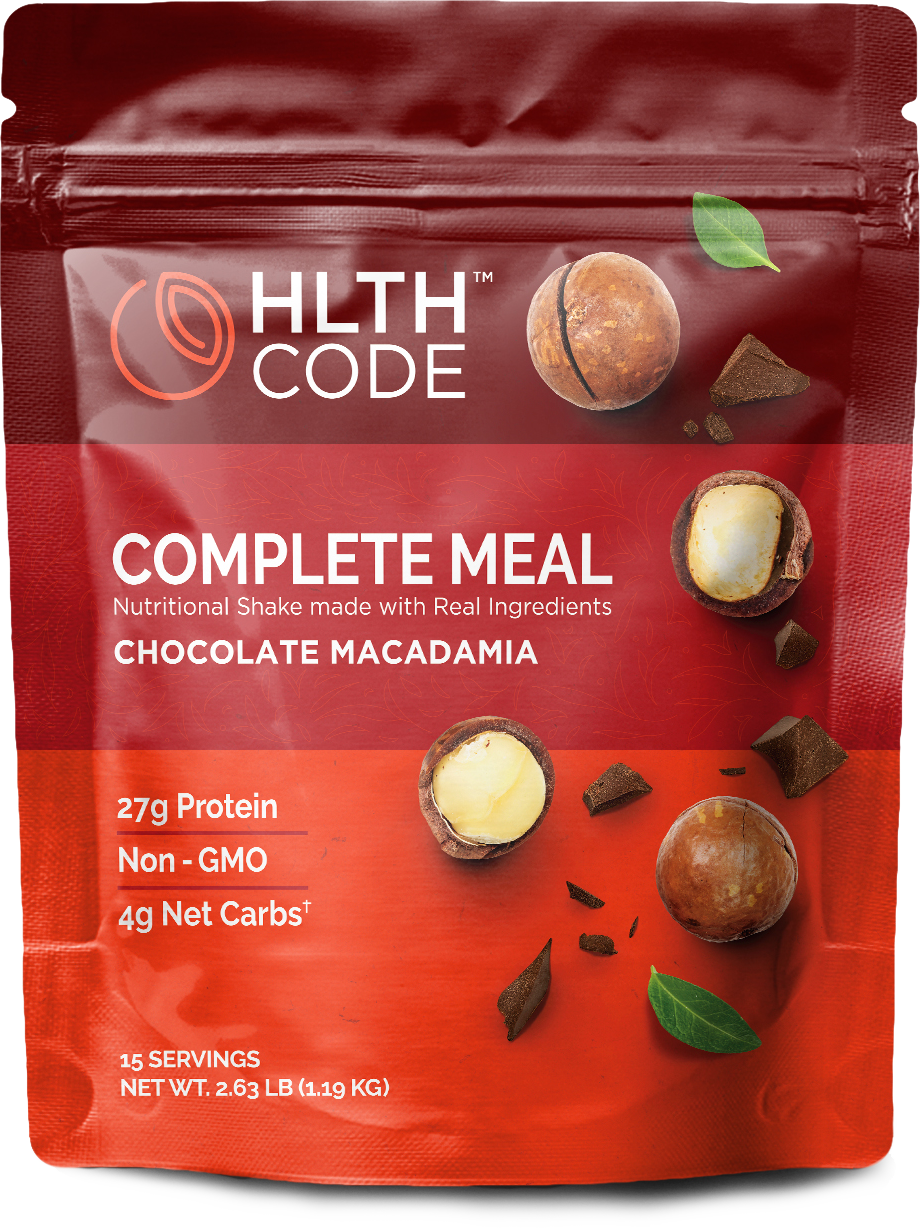
2 scoops HLTH Code Chocolate
1 tsp unsweetened cocoa powder
½ tsp baking powder
A pinch of salt (optional)
¼ cup (60 ml) coconut milk
1 Tbsp (15 g) dark chocolate chips (70% or more) + more to garnish
Liquid sugar-free sweetener to taste (optional)
Instructions:
In a microwave-safe mug, add all the dry ingredients and mix well.
Gradually add the coconut milk, mixing well to thoroughly combine the ingredients until you have a uniform, fairly thick batter.
Stir in the dark chocolate chips, reserving some to add on top. They will melt slightly during cooking, creating pockets of gooey chocolate throughout the cake. Taste the batter — if it seems not sweet enough, add a few drops of liquid sweetener; if it seems lacking in chocolate flavor, you can stir in half a teaspoon of unsweetened cocoa powder.
Now smooth out the batter a bit and add the remaining chocolate chips on top.
Microwave at full power for 60–90 seconds. Check every 10 seconds after the first 30 seconds to prevent overcooking. The cake is ready when it is firm to the touch but still slightly moist.
Let your chocolate protein mug cake cool in the mug for a minute before serving. For an extra touch, you can also flip the cake out onto a plate and top with more chocolate chips.
Nutritional breakdown (Recipe makes 1 serving)
606 Calories
31g Protein
42g Fat
16.5g Fiber
31g Total Carbs
14.5g NET Carbs

Most Popular