Chocolate Semifreddo
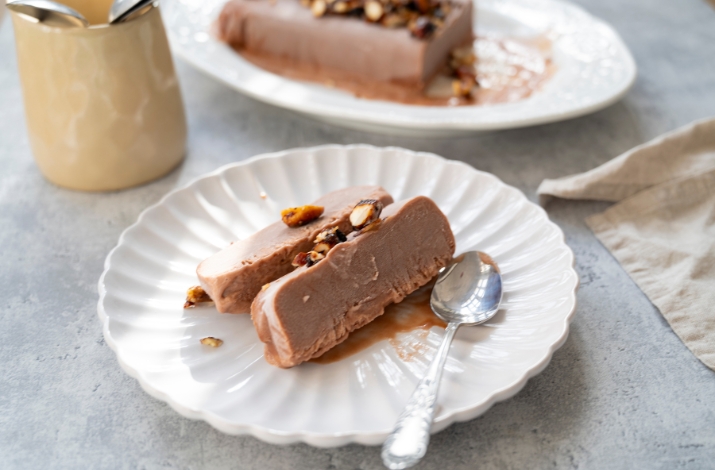
The recipe makes 6 servings.
Ingredients:
For the Semifreddo:
4 large eggs (room temperature)
2 Tablespoons monk fruit sweetener
1 cup heavy cream (240ml)
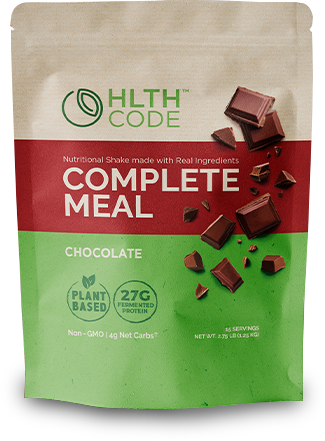
2 scoops Chocolate HLTH Code
1 teaspoon vanilla extract (optional)
Pinch of sea salt (optional)
For the Caramelized Nuts:
1/2 cup mixed nuts (walnuts, almonds, or pecans)
1 Tablespoon butter
1 Tablespoon monk fruit sweetener
Pinch of sea salt
Instructions:
For the Semifreddo Base:
In a medium bowl, whisk the eggs with the natural sweetener until pale and fluffy, about 5 minutes.
In a separate bowl, whip the heavy cream until stiff peaks form.
Gently fold the Chocolate HLTH Code, vanilla extract and a pinch of salt into the egg mixture. Then, fold in the whipped cream.
Transfer the semifreddo mixture into a loaf pan or a similar mold. Cover with plastic wrap or parchment paper and freeze for 4-6 hours or overnight until firm.
For the Caramelized Nuts:
In a small pan, melt the butter over medium heat.
Add the mixed nuts, sweetener, and pinch of salt. Stir constantly until the nuts are golden and the sweetener has caramelized, for about 3-5 minutes.
Remove from heat and let them cool slightly before sprinkling over the semifreddo.
Once the semifreddo has set, remove it from the freezer and let it sit at room temperature for a few minutes to soften slightly.
Top with the toasted, caramelized nuts and serve in slices.
Nutritional breakdown per serving. Recipe makes 6 servings.
420 Calories
25g Protein
35g Fat
4g Fiber
10g Total Carbs
3g NET Carbs


Most Popular