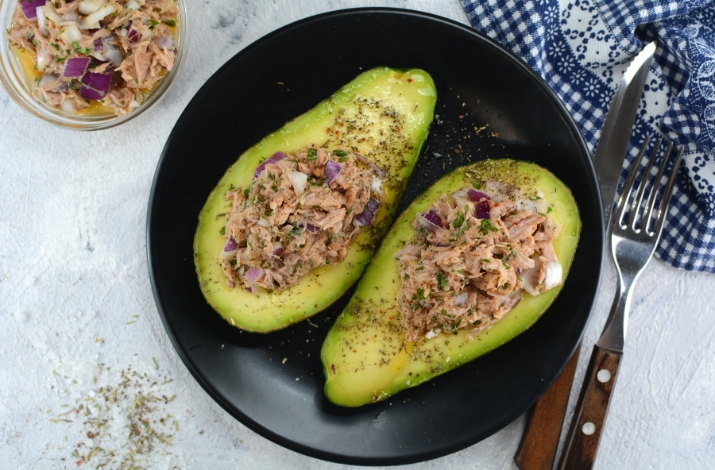
Herby Tuna Stuffed Avocado
Recipe makes 2 servings
Ingredients:
For the baked avocado:
2 ripe avocados, halved and pitted
1 Tbsp olive oil
1 tsp dried oregano
1 tsp garlic powder
½ tsp smoked paprika (optional)
Salt and pepper to taste
For the tuna salad:
1 can (5 oz / 140g) tuna, drained
¼ small red onion, finely chopped
2 Tbsp mayonnaise (or Greek yogurt for a lighter option)
1 Tbsp fresh parsley or cilantro, chopped
1 tsp Dijon mustard
1 tsp lemon juice
Salt and pepper to taste
Instructions:
Preheat your oven to 375°F (190°C).
Brush the cut sides of the avocado halves with olive oil, and sprinkle with oregano, garlic powder, smoked paprika (optional), salt, and pepper. Place the avocado halves on a baking sheet, cut side up, and bake for 12-15 minutes, or until warm and slightly softened.
While the avocados are baking, combine the drained tuna, chopped red onion, mayonnaise (or Greek yogurt), parsley, Dijon mustard, lemon juice, salt, and pepper in a bowl. Mix well to create a creamy tuna salad.
Once the avocados are done baking, remove them from the oven and let them cool slightly. Spoon the tuna salad into the cavity of each avocado half, filling generously.
Serve immediately while the avocados are still warm. Optionally, garnish with extra fresh herbs or a drizzle of olive oil.
Nutritional breakdown per serving (recipe makes 2 servings)
455 Calories
17g Protein
39g Fat
10g Fiber
14.5g Total Carbs
4.5g NET Carbs

Most Popular