Indian Beef Curry
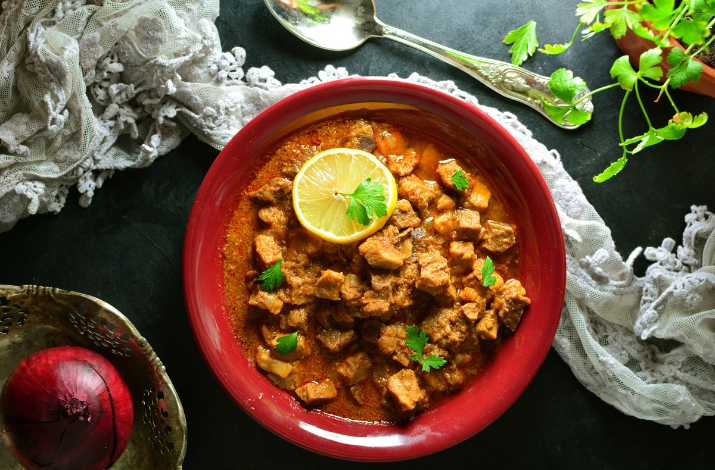
Recipe makes 4 servings
Ingredients:
28 ounces (800g) beef sirloin, cut into bite-sized pieces
2 Tbsp oil or ghee
1 large onion, finely chopped
4 cloves garlic, minced
1 Tbsp fresh ginger, grated
½ cup canned crushed tomatoes
2 Tbsp plain yogurt (optional, for creaminess)
1 ½ tsp ground cumin
1 ½ tsp ground coriander
1 tsp turmeric
1 tsp chili powder (adjust to heat preference)
1 ½ tsp garam masala
Salt to taste
1-2 cups water or beef broth (adjust for desired sauce consistency)
For garnish:
Fresh cilantro (roughly chopped)
Lemon slices or wedges
Instructions:
Heat the oil in a heavy-bottomed pot or deep skillet over medium heat.
Add the chopped onions and sauté until golden brown, about 8–10 minutes.
Stir in the garlic and ginger, cook for 1 minute until fragrant.
Add the cumin, coriander, turmeric, chili powder, and a pinch of salt. Toast the spices for a minute to release their aromas.
Add the tomatoes and cook for 5-7 minutes.
Stir in the beef pieces and mix well to coat with the spice mixture. Let it brown slightly (about 5–6 minutes).
If using, mix in the yogurt a spoon at a time to prevent curdling, then pour in the water or broth to just cover the beef.
Bring to a simmer, then reduce the heat to low. Cover and simmer gently for 45 minutes, stirring occasionally, until the beef is tender and the sauce has thickened.
Stir in garam masala in the last few minutes of cooking. Taste and adjust salt or heat as needed.
Nutritional breakdown per serving (recipe makes 4 servings)
431 Calories
61.7g Protein
16.5g Fat
2.2g Fiber
10.2g Total Carbs
8g NET Carbs


Most Popular