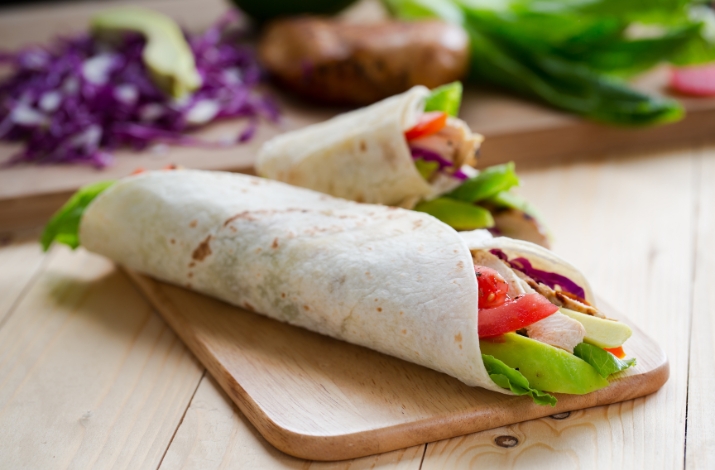
Keto Chicken Fajita Wraps
Recipe makes 6 servings
Ingredients:
Tortillas:
1 cup finely ground blanched almond flour
¼ cup coconut flour
2 Tbsp psyllium husk powder (very fine)
1 tsp baking powder
½ tsp salt
2 large eggs
2 Tbsp olive oil
½ cup warm water
Filling:
3 chicken breasts (about 21oz/ 600 g), sliced into strips
2 medium red bell peppers, sliced
1 cup red cabbage, shredded
1 avocado, sliced
1 medium tomato, sliced
1 ½ cups fresh lettuce leaves, chopped
1 ½ Tbsp olive oil
1 ½ tsp smoked paprika
1 ½ tsp ground cumin
1 tsp dried oregano
½–1 tsp chili powder (to taste)
Salt and black pepper, to taste
Instructions:
In a bowl, mix almond flour, coconut flour, psyllium husk powder, baking powder, and salt.
Add eggs and olive oil, then stir until crumbly. Gradually add warm water while kneading until a smooth, elastic dough forms.
Divide into 6 balls, roll each thin between parchment sheets, and cook in a dry skillet for 1–2 minutes per side until light golden spots appear. Set aside.
Heat olive oil in a large skillet.
Add chicken, smoked paprika, cumin, oregano, chili powder, salt, and pepper. Cook for 6-8 minutes until golden and cooked through.
Add sliced peppers and sauté 4-5 minutes until slightly softened but still crisp.
Lay out each tortilla. Add lettuce, tomato, shredded cabbage, and avocado slices.
Spoon chicken and vegetable mixture on top. Roll tightly into wraps and serve warm.
Nutritional breakdown per serving (6 servings)
468 Calories
39.3g Protein
28g Fat
9.8g Fiber
13.8g Total Carbs
4g NET Carbs

Most Popular