Almond Berry Sheet Cake
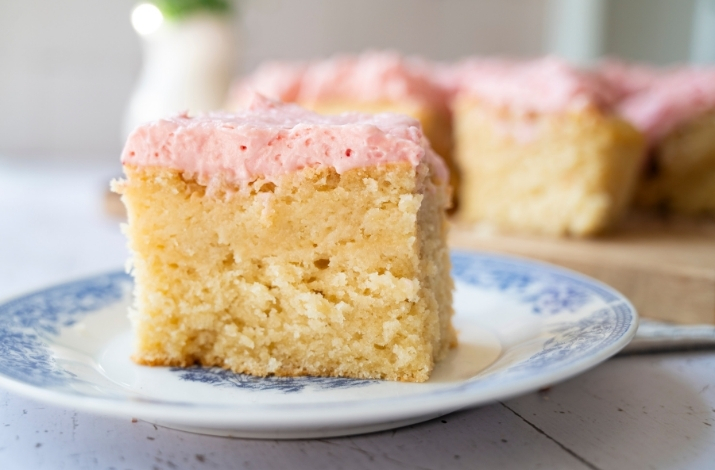
The recipe makes 9 servings.
Ingredients:
For the Almond Cake
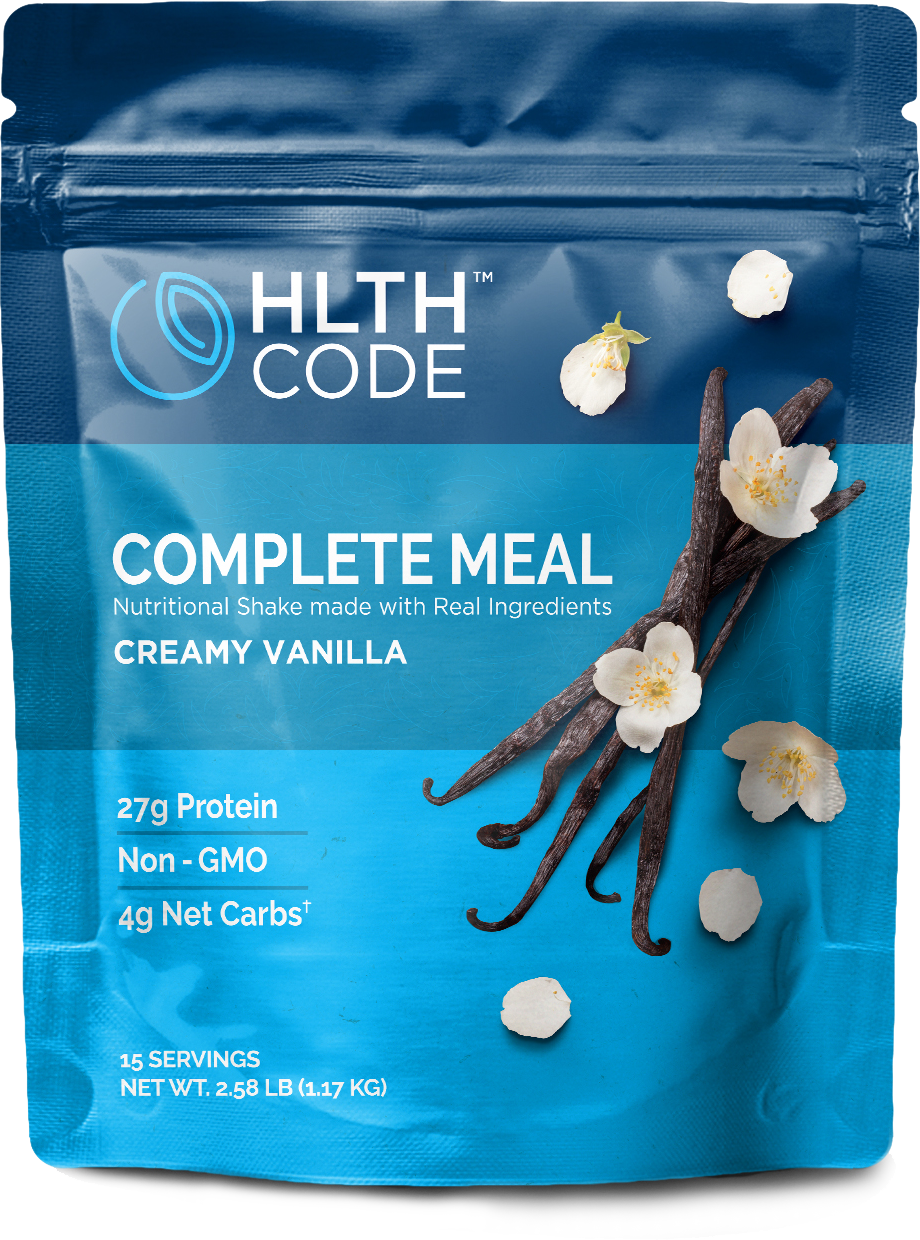
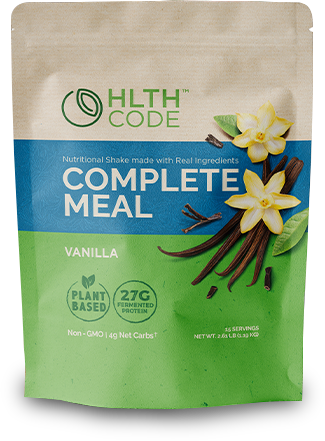
2 scoops HLTH Code Vanilla
1½ cups almond flour (150 g)
2 Tbsp coconut flour (15 g)
1 tsp baking powder
¼ tsp salt
3 medium eggs
⅓ cup melted butter (80 ml)
½ cup unsweetened almond milk (120 ml)
2 Tbsp allulose or monk fruit sweetener
For the Berry Frosting
2 scoops HLTH Code Vanilla
6 oz cream cheese, softened (170 g)
½ cup heavy cream (120 ml)
1–2 tsp raspberry powder
1–2 Tbsp monk fruit sweetener
Instructions:
For a the cake
Preheat the oven to 350°F (175°C) and line a small sheet pan (or 9×9 inch / 23×23 cm) with parchment paper.
In a bowl, whisk the almond flour, coconut flour, HLTH Code Vanilla, baking powder, salt, and sweetener.
In another bowl, whisk the eggs, melted butter, and almond milk.
Combine the wet and dry ingredients until smooth.
Pour into the pan and bake for 22–25 minutes, until set and lightly golden.
Cool completely before frosting.
For the frosting
Beat the cream cheese until smooth. And then add HLTH Code Vanilla and the sweetener.
Slowly add the heavy cream while whipping until light and spreadable.
Mix in the berry powder until evenly pink.
Spread the frosting evenly over the cooled cake, slice into squares and serve.
Nutritional breakdown per serving. Recipe makes 9 servings
330 Calories
13g Protein
27g Fat
3g Fiber
7g Total Carbs
4g NET Carbs

Most Popular