Roasted Steak Power Bowl
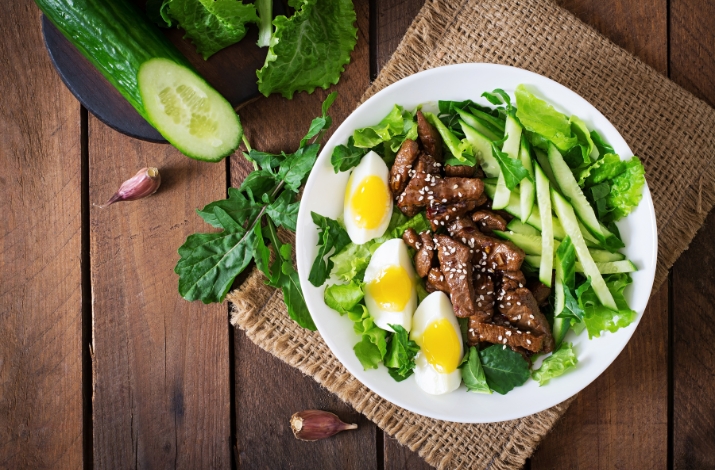
Recipe makes 2 servings
Ingredients:
For the Steak:
10.6 ounces (300 g) sirloin steak, cut into strips
1 Tbsp low sodium soy sauce
1 clove garlic, minced
½ tsp smoked paprika
½ tsp ground black pepper
¼ tsp chili flakes (optional)
1 tsp olive oil
For the Bowl:
2 large boiled eggs, quartered
2 cups salad greens (lettuce, spinach, arugula, or mix), torn
½ medium cucumber, cut into sticks
1 tsp sesame seeds
Dressing for Greens:
1 Tbsp olive oil
2 Tbsp lemon juice
Salt to taste
Instructions:
In a bowl, mix soy sauce, minced garlic, smoked paprika, pepper, chili flakes, and olive oil. Add steak strips and toss. Let marinate for 15-30 minutes (prep the rest in the meantime).
Preheat oven to 390°F (200°C). Line a baking tray with parchment paper or lightly oil it.
Spread steak strips out evenly. Roast for 10-12 minutes, turning halfway, until golden and slightly crisp on edges.
Boil the eggs (place in cold water, bring to boil, cook 8-10 minutes), then peel and slice.
Wash and tear salad greens. Cut cucumber into sticks. Set aside.
Whisk olive oil, lemon juice, and a pinch of salt.
Arrange greens and cucumber on two plates. Add sliced eggs. Top with roasted steak strips.
Drizzle greens with dressing and sprinkle sesame seeds over steak. Enjoy!
Nutritional breakdown per serving (recipe makes 2 servings)
569 Calories
48.5g Protein
38g Fat
2g Fiber
7g Total Carbs
5g NET Carbs

Most Popular