Upside-Down Plum Cake
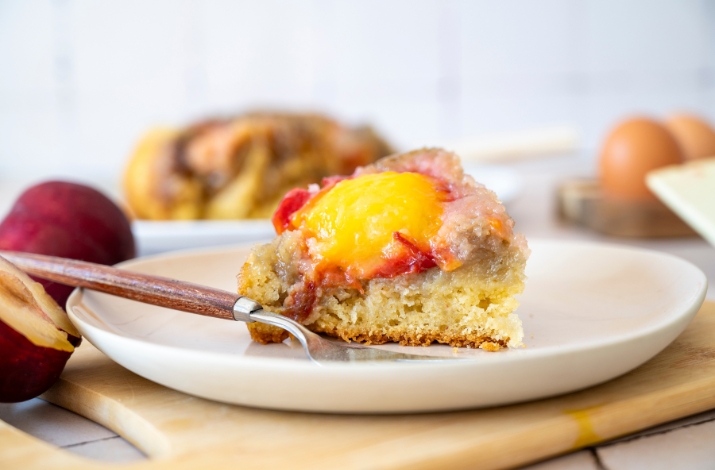
The recipe makes 8 servings.
Ingredients:
For the Cake Batter:
1 cup (3.5 oz / 100 g) almond flour
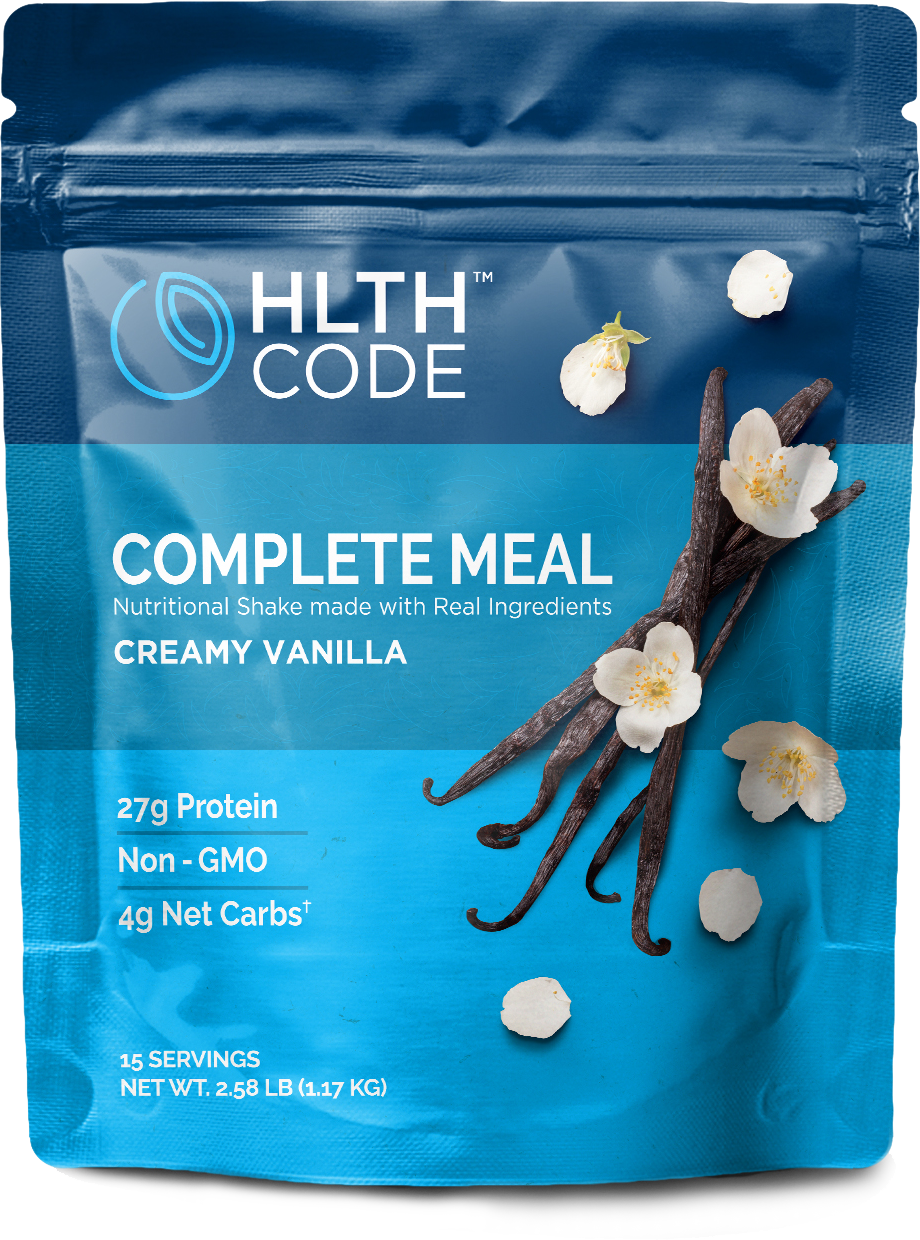
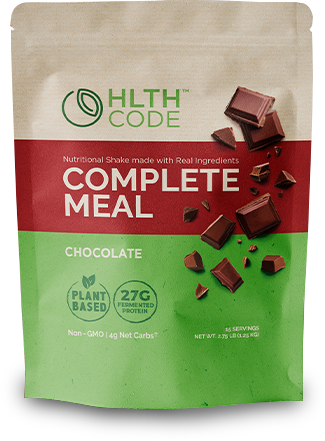
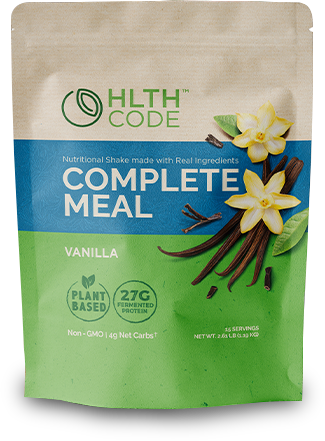
2 scoops HLTH Code Vanilla
2 Tablespoons (0.7 oz / 20 g) coconut flour
1 teaspoon baking powder
1/4 teaspoon salt
1/4 cup (1.8 oz / 50 g) monk fruit sweetener
3 medium-sized eggs
1/4 cup (2 fl oz / 60 ml) unsweetened almond milk
1/4 cup (2 oz / 56 g) melted butter or coconut oil
1 teaspoon vanilla extract
For the Plum Topping:
2–3 small plums, halved (about 1 cup / 150 g total)
1 Tablespoon (0.5 oz / 14 g) butter
1 Tablespoon monk fruit sweetener
Instructions:
Preheat oven to 350°F (175°C). Grease a 9-inch (23 cm) round cake pan and line the bottom with parchment paper.
In a small skillet, melt 1 Tbsp butter with 1 tbsp monk fruit sweetener. Let it bubble for 1–2 minutes until it slightly thickens. Pour into the bottom of the prepared pan and spread evenly.
Arrange the plums in a circular pattern over the butter and monk fruit base.
In a medium bowl, whisk together almond flour, HLTH Code Vanilla, coconut flour, baking powder, and salt.
In another bowl, beat the eggs with monk fruit sweetener, almond milk, melted butter, and vanilla extract until smooth.
Add the wet ingredients to the dry and stir until fully combined and thick.
Gently spread the batter over the plums in the pan, smoothing the top.
Bake for 30–35 minutes, or until the top is golden and a toothpick comes out clean.
Let the cake cool in the pan for 10 minutes, then carefully invert onto a plate. Remove parchment and let cool further before slicing.
Nutritional breakdown per serving. Recipe makes 8 servings.
210 Calories
9g Protein
17g Fat
3g Fiber
8g Total Carbs
4g NET Carbs

Most Popular